Post-operative rehabilitation for dogs in Colleyville, Texas, working from your surgeon's instructions.

Your dog has had the operation, you have been handed a sheet of discharge instructions, and the next few weeks are mostly up to you. That is a lot of responsibility to be sent home with.
What happens in those weeks has a great deal to do with how well the repair holds, and with whether your dog ends up using the leg properly or just carrying it around.
An operation fixes a structure. It is very good at that, and for the right dog it is the right answer. But four things are left over afterwards, and none of them resolve on their own:
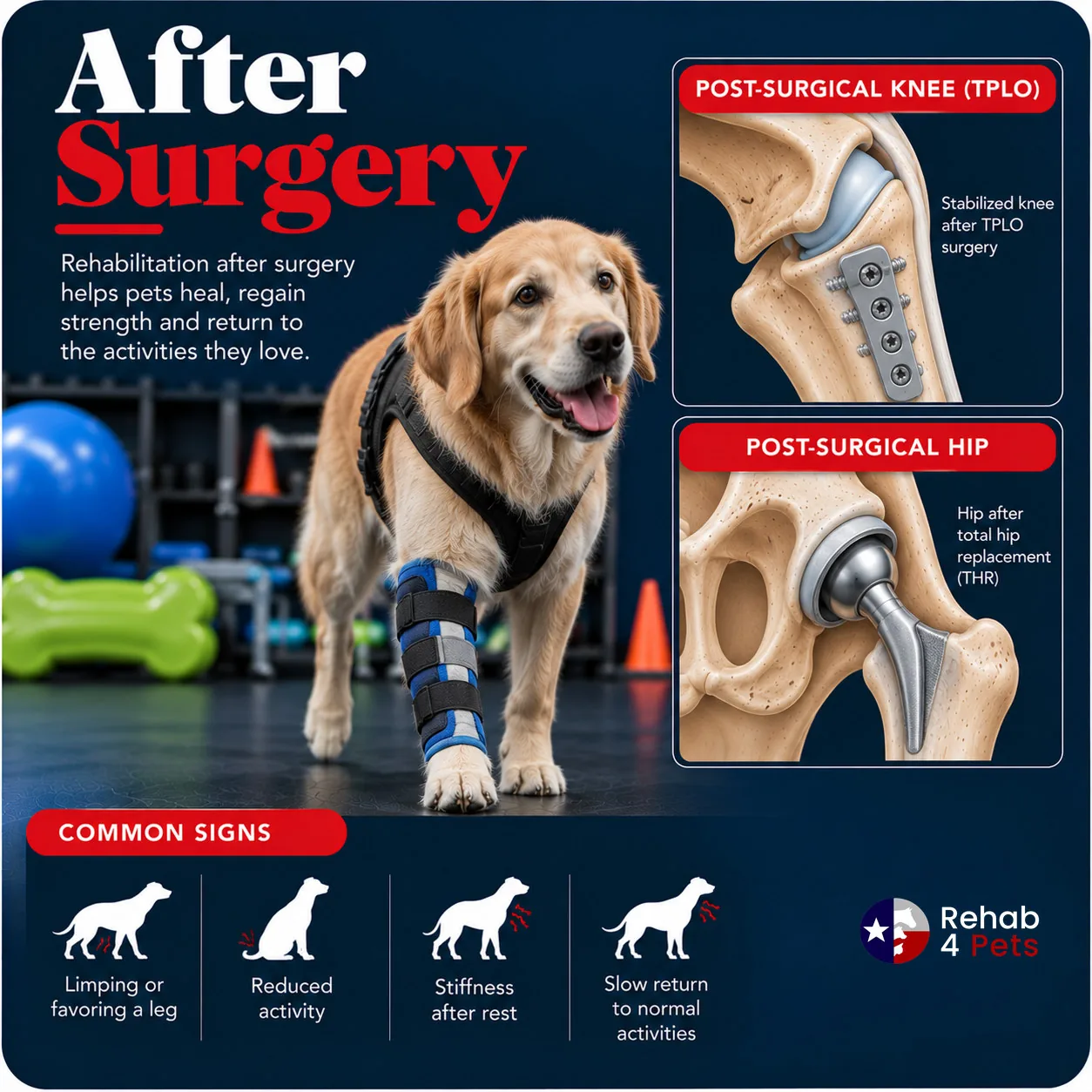
Two of the common repairs: a knee held steady by a plate and screws after a TPLO, and a hip after a total replacement. These are examples rather than the whole list. Whatever the procedure, what happens afterwards is what decides how well that leg carries its share again — weeks of a dog not using a leg costs muscle, and the other three end up taking it.
The operation addresses the problem. Rehabilitation addresses everything the problem caused.

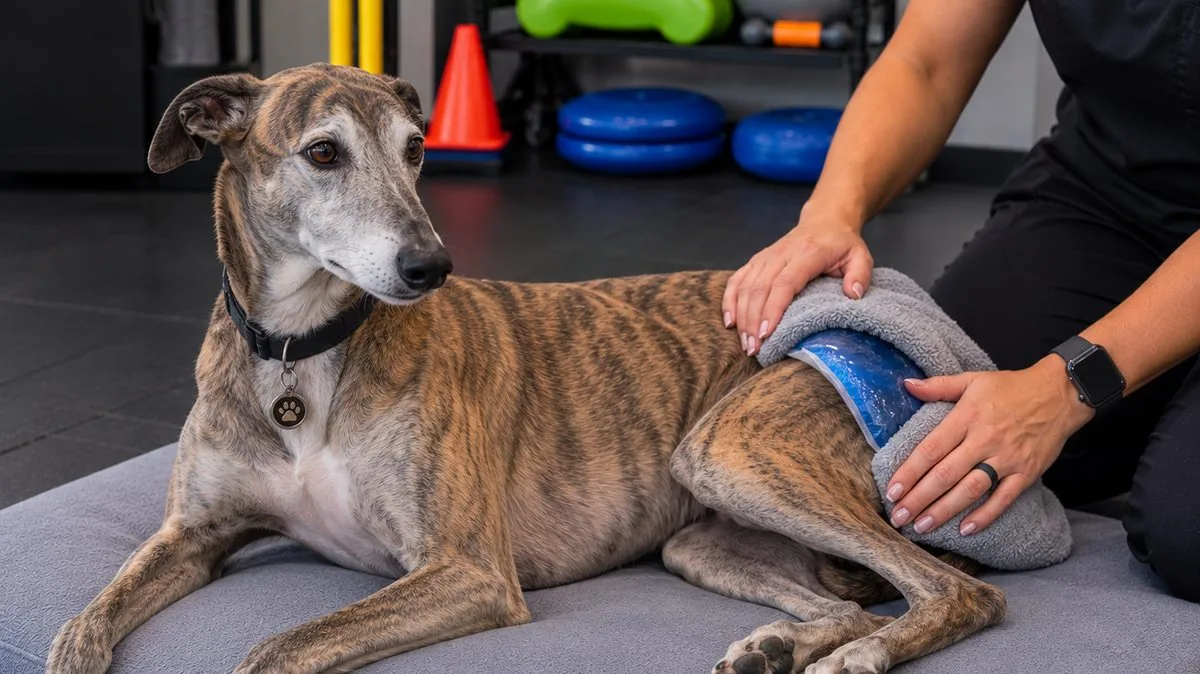
Usually sooner than Pet Parents expect, and the first appointment is not strenuous. If your dog has had surgery, we start with an initial post-op appointment and evaluation, where we check your dog’s progress in the healing process. You leave with a home program and instruction on how best to progress their recovery.
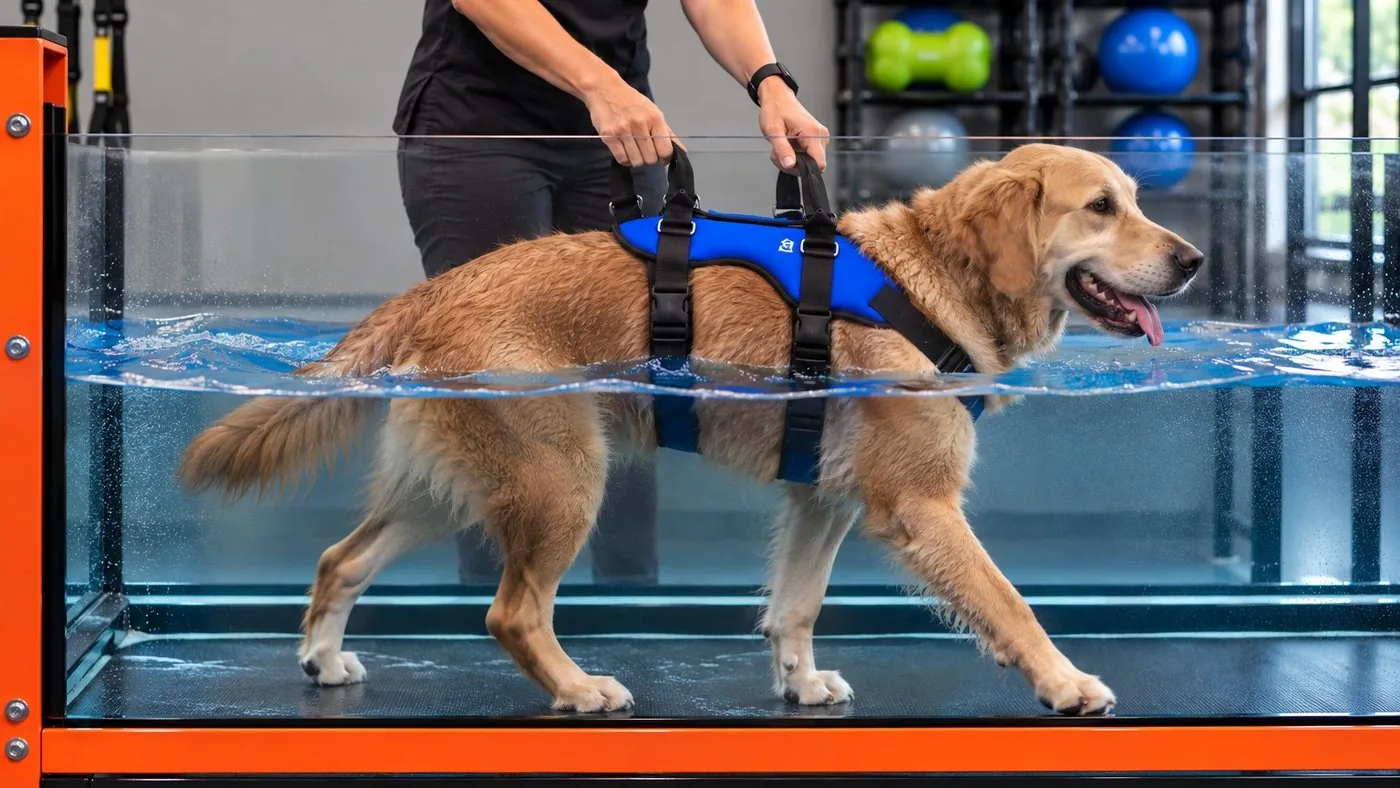
Water work waits for the wound. Most of the time skin staples and sutures come out at around two weeks, and if the wound is healed, underwater treadmill work can start then.
Everything follows your surgeon’s plan. We ask for their instructions, and we work from them rather than around them.
The shape of it depends entirely on which procedure your dog has had and how they are healing. Nothing here is a template applied to every dog.
Most often knee, hip, spinal and elbow procedures, including cruciate repairs and surgery for disc disease. If your dog has had something else and you are wondering whether rehabilitation applies, the answer is usually to call and describe it rather than guess from a web page.
If the operation was months or even years ago and your dog never quite came right, that is still worth a conversation. A leg that was never properly used often has more to do with accumulated compensation than with the repair itself, and compensation responds to work.
Runners and yoga mats along every route your dog takes, especially between their bed and the door. A slip in the first two weeks is the thing everyone worries about, and it is largely preventable.
Progress is gradual enough to be invisible day to day. A ten-second clip from the same angle each week shows you, and us, what is actually changing.
Earlier than most Pet Parents expect. The first post-operative appointment is an evaluation to check how the healing is going and to give you a home program you can start straight away. Water treadmill work usually waits until the wound has healed, most of the time skin staples and sutures come out at around two weeks, and if the wound is healed, treadmill work can begin then. Everything follows the surgeon’s instructions.
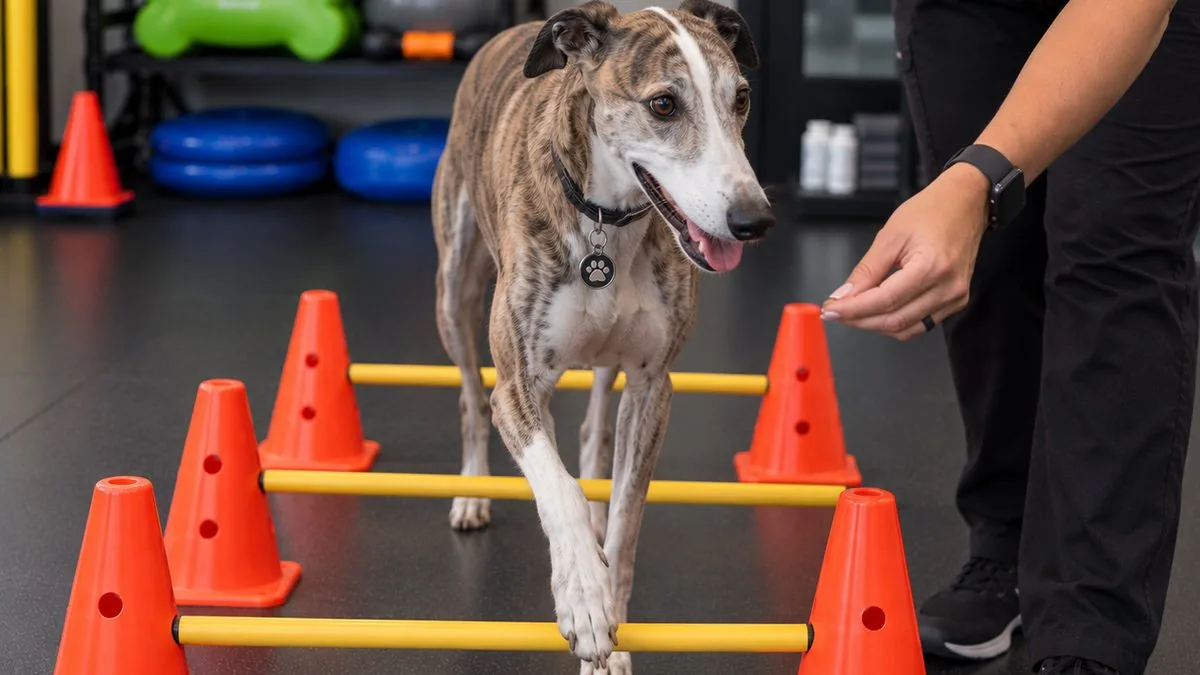
Surgery repairs the structure. It does not rebuild the muscle lost while the dog was limping, and it does not teach them to trust the leg again. Dogs commonly keep favoring the operated leg long after it is sound, which loads the other side. Rehabilitation addresses the strength, the symmetry and the confidence, the parts the operation was never meant to fix.
Knee, hip, spinal and elbow procedures most often, including cruciate repairs and surgery for disc disease. We work from the referring surgeon’s instructions rather than around them.
The first visit is an initial post-op appointment and evaluation, where we check your dog’s progress through the healing process. You leave with a home program and instruction on how best to progress the recovery between visits. Most of the work happens at home; the appointments guide it.
Often yes. Dogs who never fully regained use of a limb are frequently carrying months of compensation rather than an unhealed repair, and compensation is something that responds to work. It is worth a phone call even if the operation was last year.

Water carries much of a pet’s weight, so they can rebuild muscle before their joints could manage it on land.
Read more
Targeted strengthening, plus a home program you can continue between visits.
Read more
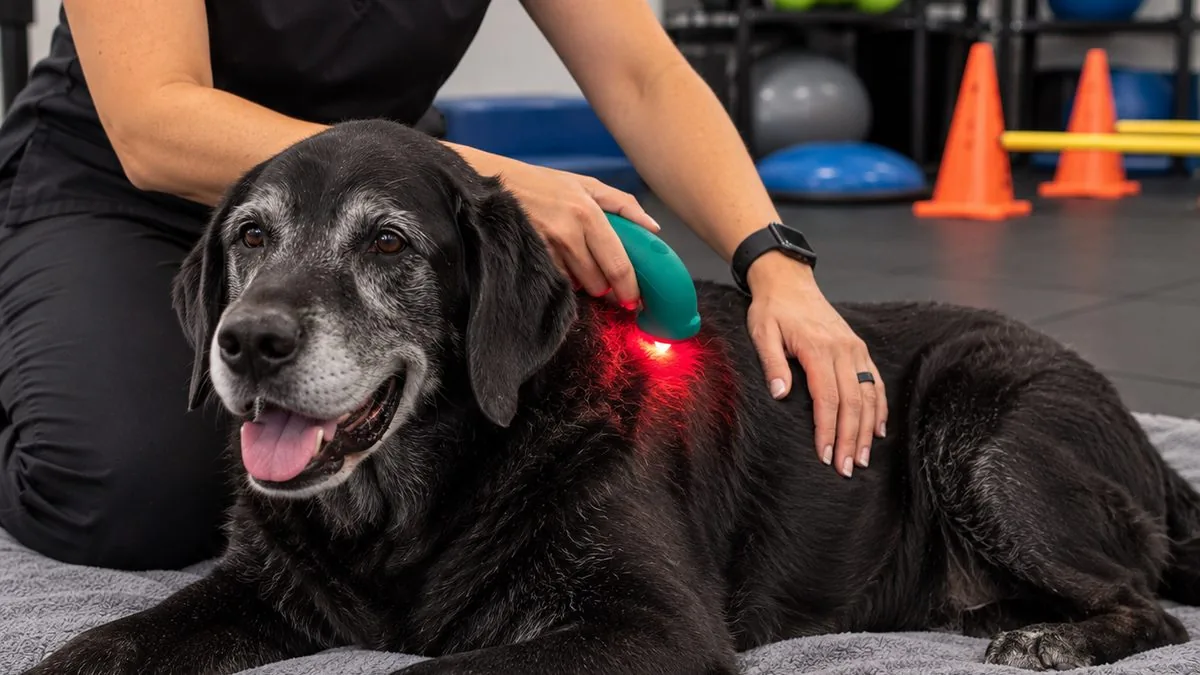
Light that reaches deep into tissue without damaging it. Most pets settle and doze through it.
Read moreTalk to your surgeon or veterinarian about when they would like rehabilitation to begin, many are glad to be asked, and some will suggest it themselves.