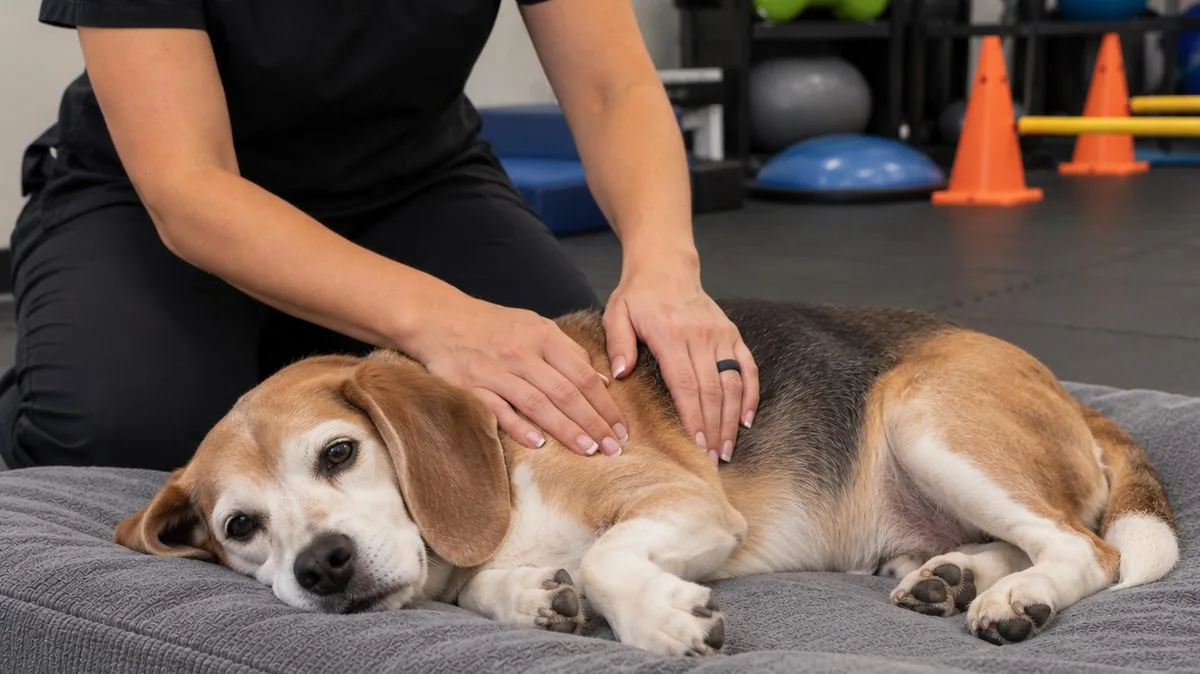
Vestibular disease in dogs, what it is, and how rehabilitation may help. Colleyville, Texas.

It usually arrives without warning. An older dog who was fine yesterday now has their head tilted to one side, is stumbling or circling, and may have been sick. Their eyes may be flicking rapidly from side to side.
Most Pet Parents who see this for the first time think their dog has had a stroke. It’s genuinely frightening to watch.
Very often it isn’t a stroke, and very often it improves.
That’s worth knowing tonight, before anything else on this page.
See your veterinarian first, and soon
Several things can cause these signs, and some of them need treating quickly, an inner ear infection, a reaction to medication, or something less common.
Your veterinarian needs to work out which it is. Nothing on this page is a substitute for that, and it’s a same-week visit rather than a wait-and-see.
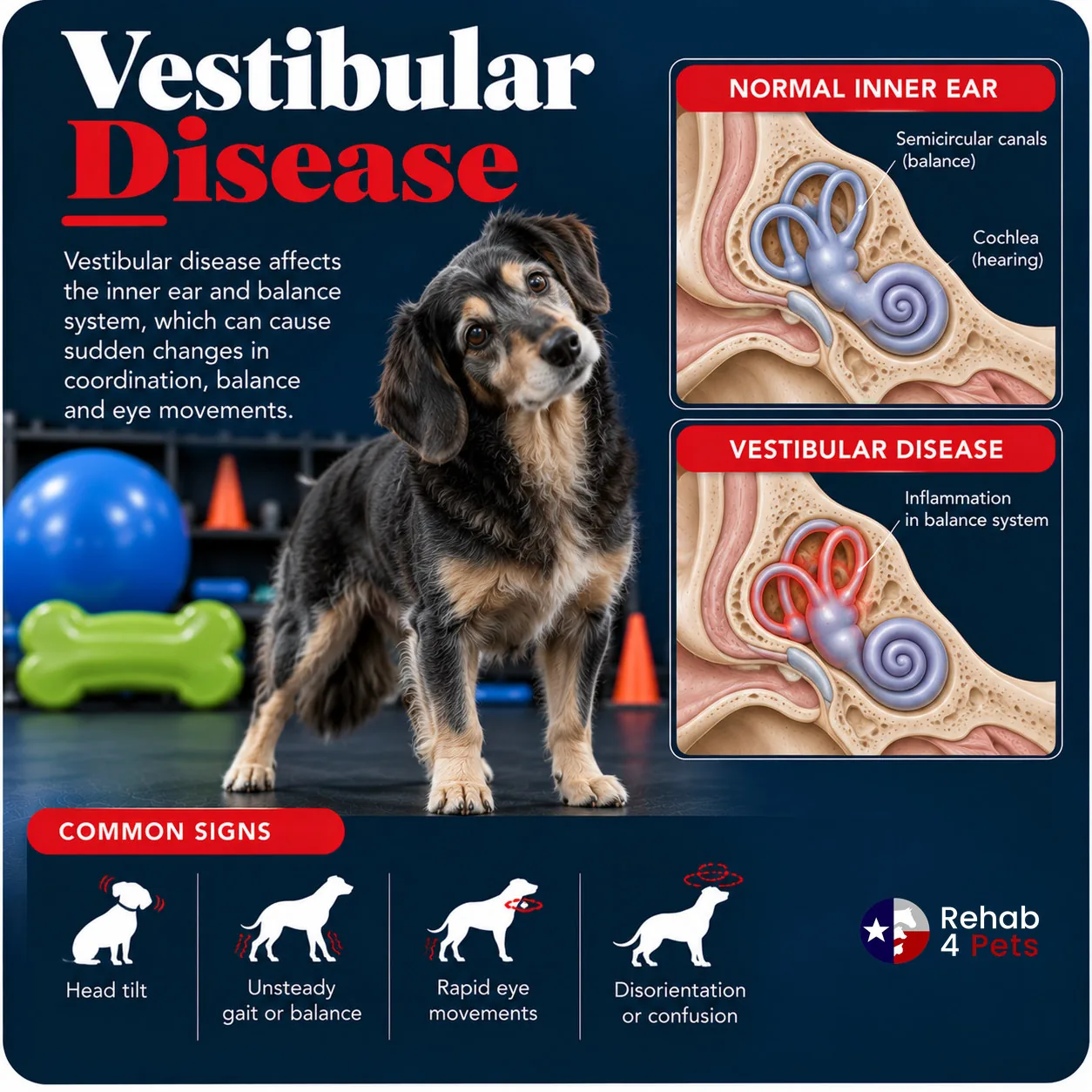
The vestibular system is what tells your dog which way is up. It sits partly in the inner ear and partly in the brain, and when it’s disturbed the world stops making sense.
It’s closest to vertigo in people, and like vertigo, it brings dizziness, nausea and a complete loss of coordination. It’s most often seen in older dogs.
A balance organ sits inside each ear, and the brain works out which way is up by comparing the two. When one side is inflamed and stops reporting properly the two no longer agree — so the head tilts toward the quiet side, and the world appears to spin. Hearing usually carries on unaffected.
The signs usually include a head tilt, walking in circles toward one side, rapid flicking eye movements, and in more severe cases collapse, because the loss of balance is simply too much to stand up through.

You may well be told this resolves by itself, and often it does. Many dogs improve over days to weeks with nothing more than time and careful nursing.
But not all of them. Some dogs are slow to recover, and a proportion only resolve properly once they’ve had treatment. A permanent head tilt is not unusual in dogs left to recover unaided.
The question isn’t really whether it will improve. It’s how quickly, how completely, and how rough the interim is.
Because a dizzy dog who can’t stand up is not having a good week, and neither are you.
This is the part rarely explained anywhere, so it’s worth setting out properly.
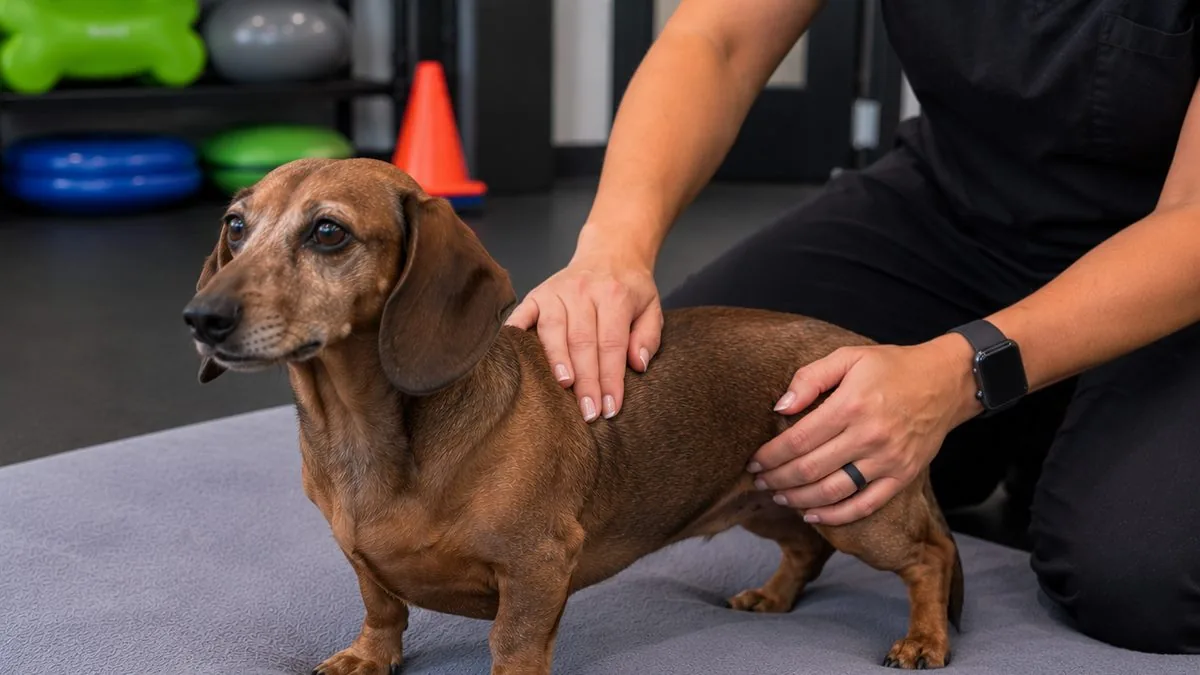
In nearly every case, one side of the head and neck is tighter than the other. Releasing that tension improves blood and lymphatic flow through the area and helps reset the neurological system, which lets the body find its balance again sooner.
Acupuncture releases tension in the same way. And rehabilitation exercises do something quite specific:
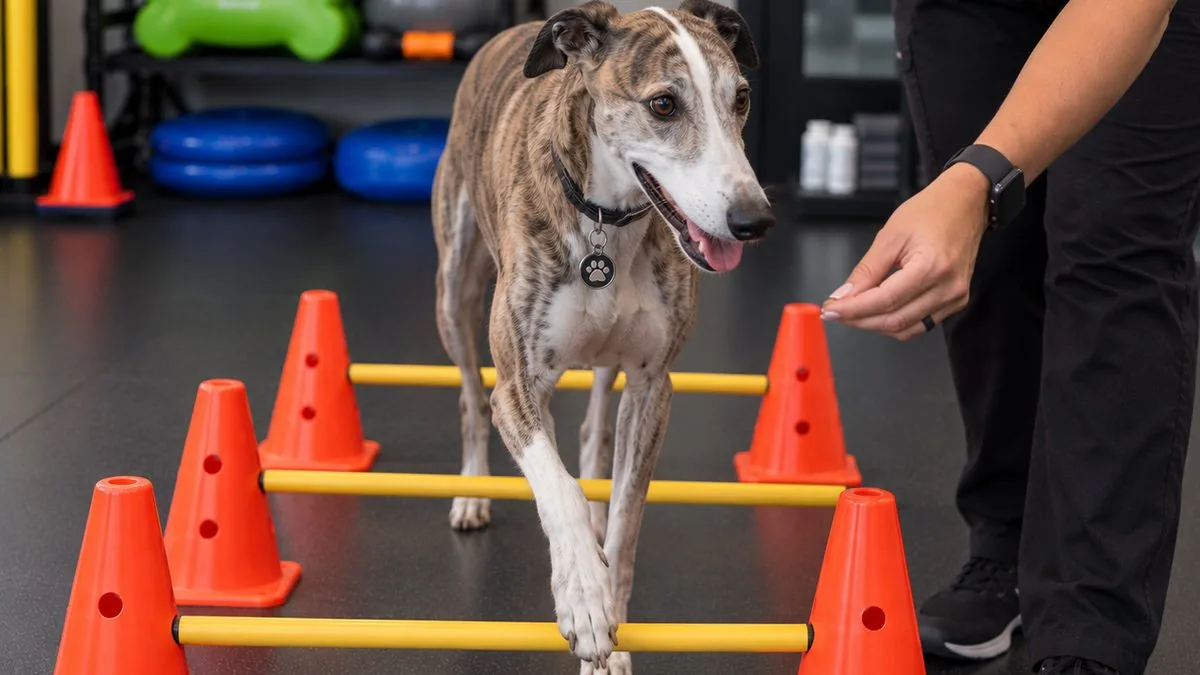
They teach the eyes to find the horizontal again.
A dog whose world has tilted has to relearn where level is, and that’s a skill that can be practiced.
Combined, chiropractic and osteopathic technique, acupuncture, rehabilitation exercises and supplements, these are gentle, simple therapies. For a dog in the middle of this, they can make a considerable difference to how comfortable the recovery is.

Most Pet Parents who see this for the first time think their dog has had a stroke. Very often it is vestibular disease rather than a stroke, and very often it improves. It still needs a veterinarian this week, because several things can cause these signs and some of them need treating quickly, an inner ear infection, a reaction to medication, or something less common.
The vestibular system is what tells a dog which way is up. It sits partly in the inner ear and partly in the brain, and when it is disturbed the world stops making sense. It is closest to vertigo in people, bringing dizziness, nausea and a complete loss of coordination. It is most often seen in older dogs.
A head tilt, walking in circles toward one side, rapid flicking eye movements, nausea or vomiting, and in more severe cases collapse, because the loss of balance is too much to stand up through.
Often it does, many dogs improve over days to weeks with time and careful nursing. But not all of them. Some dogs are slow to recover, and a proportion only resolve properly once treated. A permanent head tilt is not unusual in dogs left to recover unaided. The real question is how quickly, how completely, and how rough the interim is.
In nearly every case, one side of the head and neck is tighter than the other. Releasing that tension improves blood and lymphatic flow and helps reset the neurological system so the body finds its balance sooner. Acupuncture releases tension the same way. Rehabilitation exercises do something quite specific: they teach the eyes to find the horizontal again.

Targeted strengthening, plus a home program you can continue between visits.
Read more
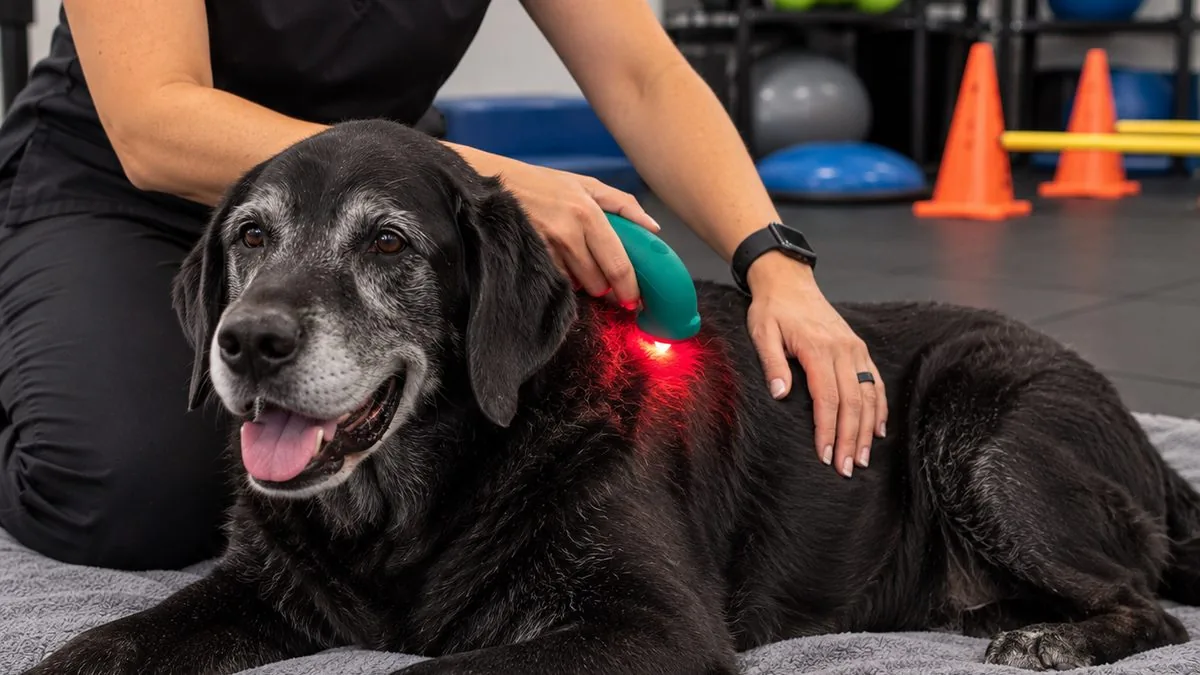
Light that reaches deep into tissue without damaging it. Most pets settle and doze through it.
Read more
Hands-on muscle work for dogs who have been compensating for something painful.
Read moreYour veterinarian first, this week, so the cause can be identified.