
Post-operative knee surgery, what do you need to know?
Surgery & Recovery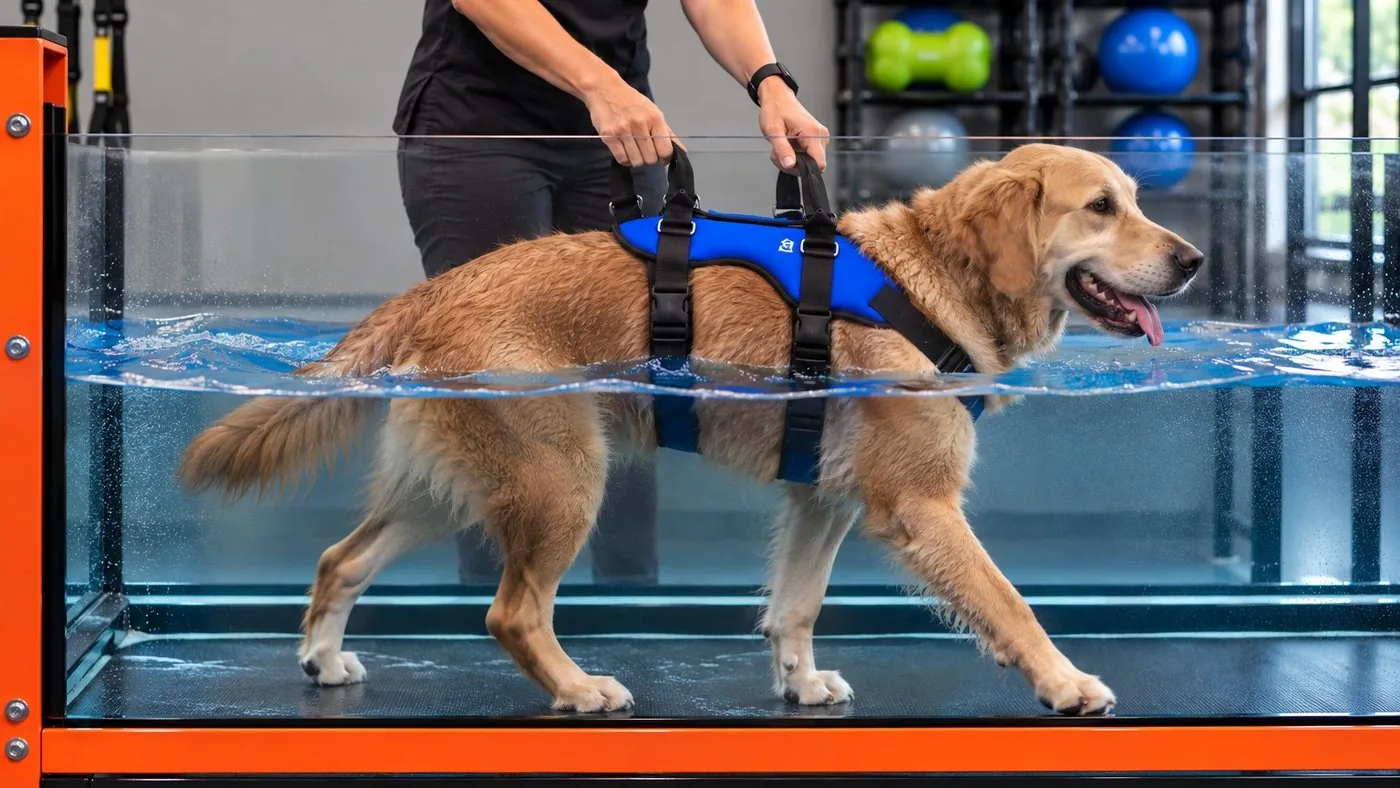
In practice we see a lot of cranial cruciate ligament (CCL) and patella luxation surgical repairs. They are the most common reasons for knee surgery in dogs. We used to see a lot of TTA repairs from CCL tears, but TPLOs have become much more popular in the last few years.
Something I have noticed is that if there is a complication of any kind, poor pain management, excessive swelling, infection, plate or screw issues, these dogs have a tendency to constantly struggle with the affected leg.
These dogs will often have a permanent limp or off-loading of the surgical limb. In many cases the dog has full stifle range of motion, no compensatory areas of pain or dysfunction (sacroiliac or lumbar spine dysfunction, muscular compensations in sartorius or gracilis), and appropriate muscle tone, and they can still be seen not to fully weight bear on the surgical leg.
The question keeps coming up: why?
The psychological and habitual elements
I believe there are two components in these cases. Prolonged pain can change the central nervous system and cause an overrepresentation of that limb or affected region in the homunculus of the brain. As a result, any problem occurring in the affected limb becomes amplified when interpreted by the brain. Limb functioning is altered compared to the other side.
When this happens in our canine patients it is hard to normalize. It is hard to change these compensations in people, with whom we can work on the psychology of pain management. When addressing it in dogs, we likely have to use physical stimulus to change the psychology.
Are we taking them far enough?
Another factor worth considering, particularly in sporting and show dogs, is that we may not be getting them sport-specific ready. We are not taking these dogs far enough along in their rehabilitation, because we are not prescribing challenging intensity exercises to get them to higher levels of function.
Certain disciplines within the dog world also come with Pet Parents and handlers who notice the most subtle alterations in gait or weight bearing, turns of the leg, positioning of the foot, bend of stifle, level of the topline.
So if we look at the component of return-to-sport rehabilitation, we need to learn to prescribe higher levels of exercise: bursts, change of direction, strong muscle contractions, acceleration, deceleration.
An example from practice
Ben is a four-year-old golden retriever who had an extracapsular repair and developed an infection at the surgical site that lasted for ten weeks post-op. During that recovery time, Ben never put weight on that leg.
Ten months later he will still occasionally toe touch in standing and off-load the leg. No pain, full range of motion, no meniscal tear, no other issues, just habitual at this point, I believe.
So what do we do after knee surgery?
- Manage pain and swelling aggressively early in the post-operative period.
- Ensure rehabilitation incorporates advanced strengthening, underwater treadmill work and “bootcamp” at around the six to eight week mark.
- Retrain sport-specific tasks.
- Rehabilitate for longer, or bring the dog back in at a later stage.
- Be creative, and think outside our protocols and paradigms to break habitual limb use dysfunctions.
My plan with this patient is to diversify his activities, possibly introduce some pulling to engage the hindlimb and pelvis, maybe some discipline work for strength and explosive force propulsion, and continue with sport-specific programs.
What would you do?
If your dog is still not using a leg properly after surgery, our page on rehabilitation after surgery explains how we can help.
Related reading: How do I know if my dog is in pain? · Which dogs benefit from chiropractic care?
Questions Pet Parents ask
Why is my dog still limping months after knee surgery?
Sometimes it is pain or a complication, which your surgeon needs to check. Sometimes the repair is sound and the dog has simply learned to protect the leg. Rehabilitation can help retrain how they use it.
When should rehabilitation start after knee surgery?
Gentle work often starts within the first couple of weeks, once your surgeon is happy. Stronger exercises come later, usually from around six to eight weeks.
Can a dog go back to sport after knee surgery?
Many can, with a rehabilitation plan that builds up to sport-specific work like bursts, turns and acceleration, rather than stopping at everyday walking.