Call 303-388-6886Call us

Your dog is slowing down. It may not be only age.

What’s often behind it, and what can still be done.

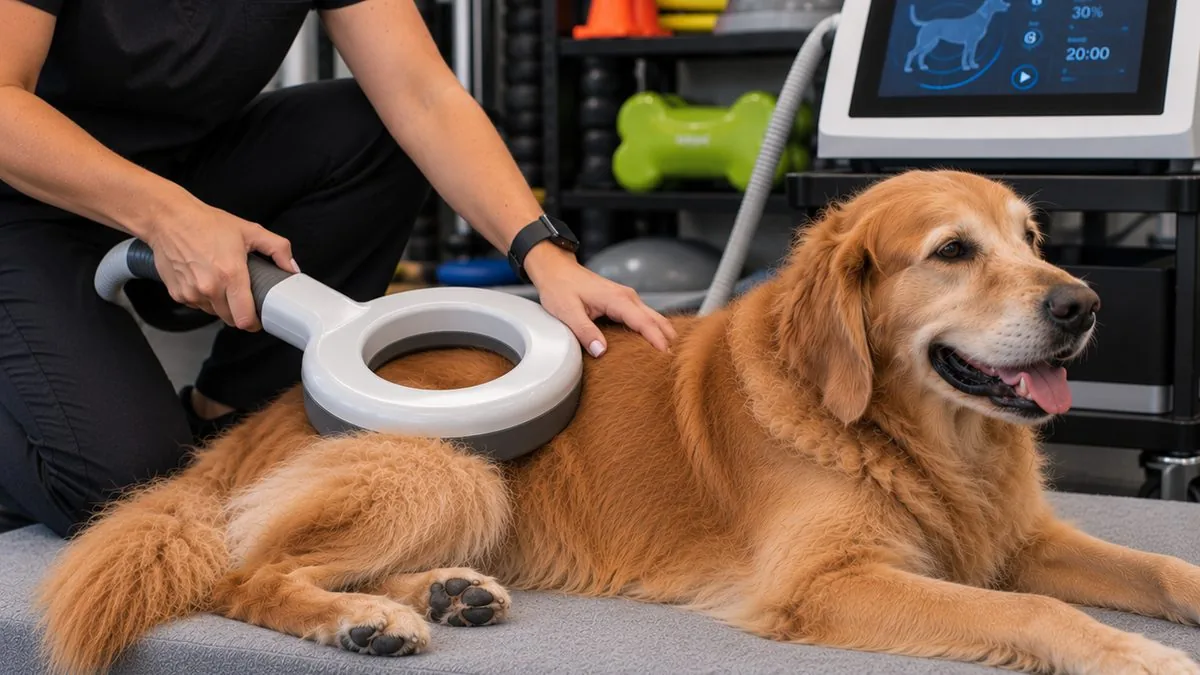
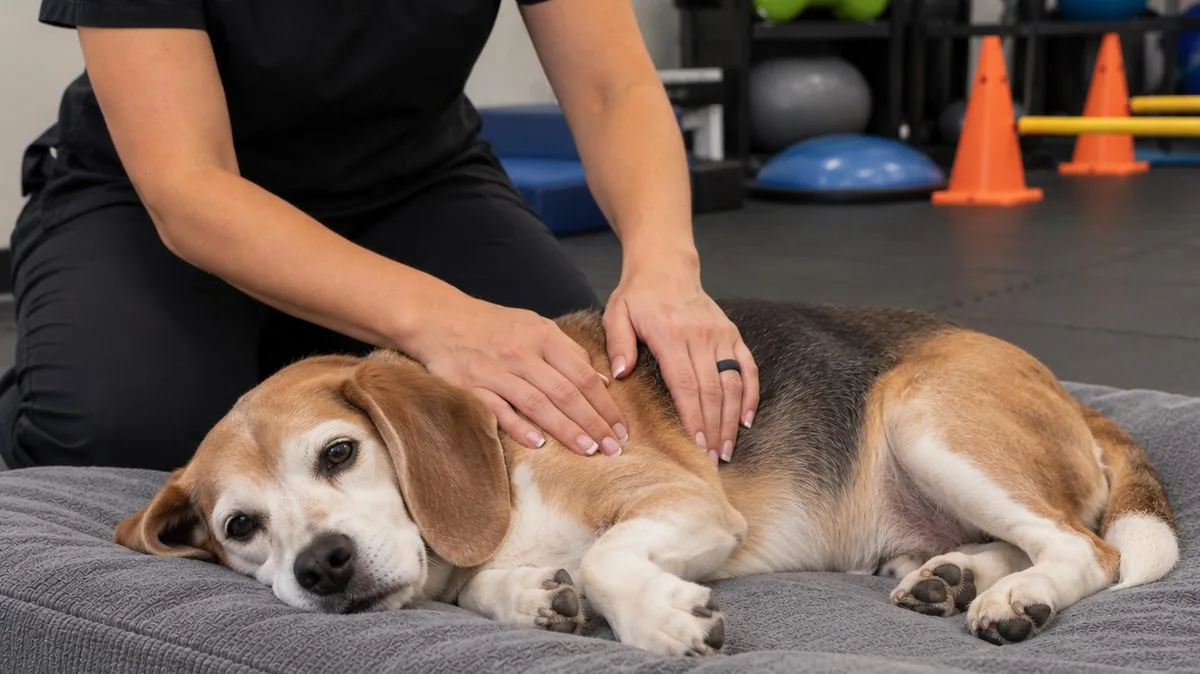
An older brindle dog lying calmly on a bed while a magnetic therapy ring is positioned at his shoulder

He still wags. He still eats. He still meets you at the door, just a beat later than he used to.

Slowing down happens so gradually that most Pet Parents can’t point to a day it started. You just look up one afternoon and realize the walk is shorter than it was a year ago, and he’s not asking for the ball as much.

It’s easy to file that under getting older and leave it there. Often, though, there’s something underneath it that can be helped.

What slowing down actually looks like

  • Stiff for the first few minutes after getting up, then loosening off
  • Taking the stairs more carefully, or waiting at the bottom
  • Not jumping onto the couch or into the car any more
  • Turning for home earlier on walks
  • Lying down sooner, or shifting position more in the night
  • Less interested in play, or stopping sooner than he used to
  • Slower to get up when you come in
  • Reluctant to be touched in one particular spot

Stiffness that’s worse after rest and eases with movement is one of the most common patterns of all, and one of the most responsive to help.

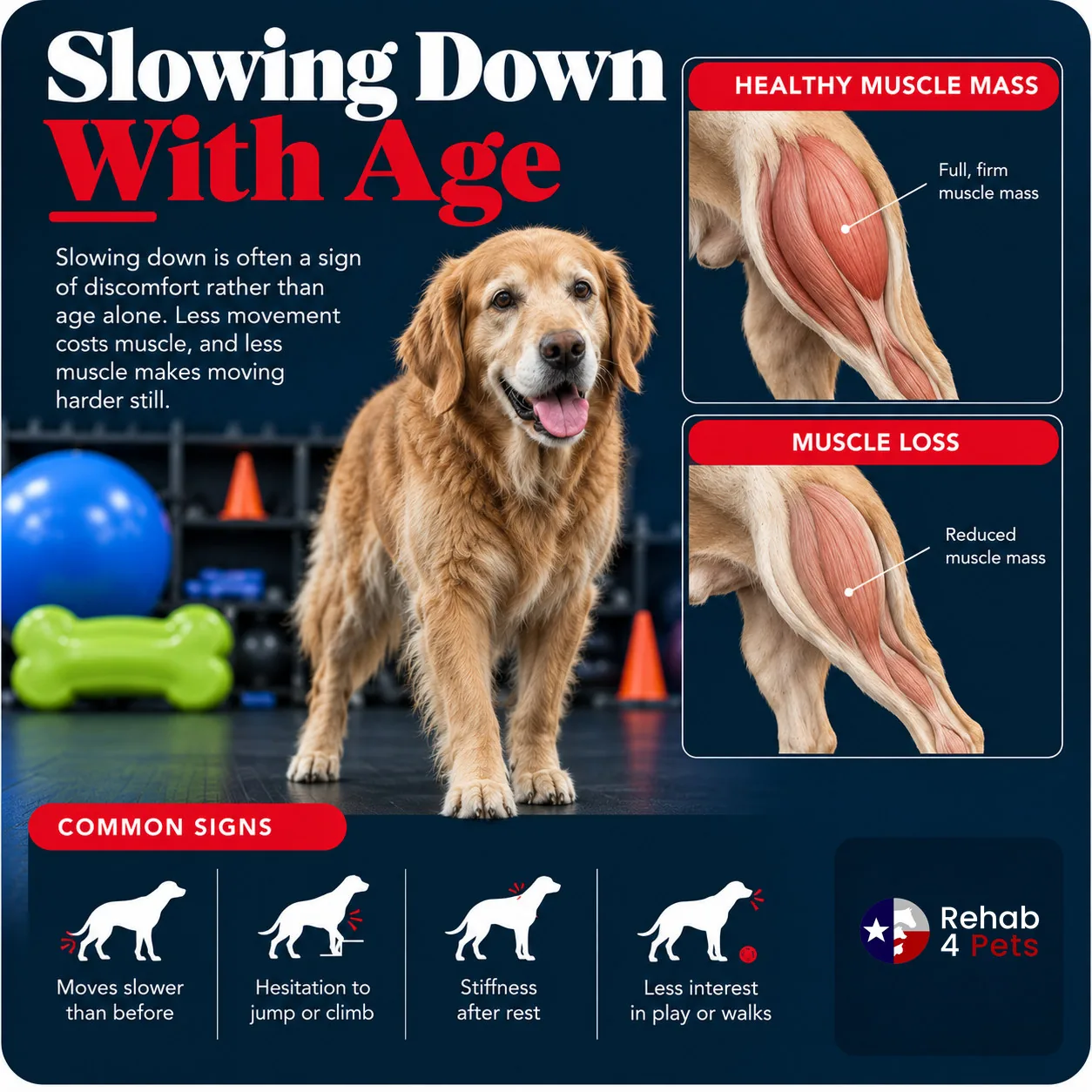
Full muscle beside muscle that has wasted. Less muscle means the joints carry more load, which is uncomfortable, which means less moving — and less moving costs more muscle again. Most of what gets called slowing down sits somewhere in that loop, which is also why it is often reversible.

A senior dog beside a hind limb with full muscle mass and one where that muscle has wasted.

Call 303-388-6886

Why age alone rarely explains it

Getting older changes a dog. Muscle takes longer to build and is quicker to lose, joints have more wear on them, and recovery from a hard day takes longer than it did.

But age doesn’t usually make a dog favor one side, or avoid one specific movement, or flinch at a particular touch. Those are signs of discomfort, and discomfort usually has somewhere it’s coming from.

There’s also a cycle worth knowing about. A dog who hurts moves less. Moving less means losing muscle. Less muscle means the joints carry more of the load, which hurts more, so he moves less still. Much of what looks like aging is that loop, several turns in.

The encouraging part: loops can be interrupted.

What’s often behind it

Your veterinarian is the person to tell you what’s happening with your dog. Common contributors include:

  • Arthritis. Very common in older dogs and very often under-treated, partly because dogs are so good at hiding it.
  • Carrying extra weight. Even a few pounds meaningfully changes how much every step costs an achy joint.
  • Muscle loss. Common with age and inactivity, and one of the most reversible things on this list.
  • An old injury. Something from years ago that’s changed how he moves ever since.
  • Back and neck discomfort. Can look like general slowness rather than anything specific.
  • Early nerve or spinal changes. Sometimes showing first as a subtle drop in coordination.

Call 303-388-6886

What can be done

This is the part most Pet Parents don’t know is available.

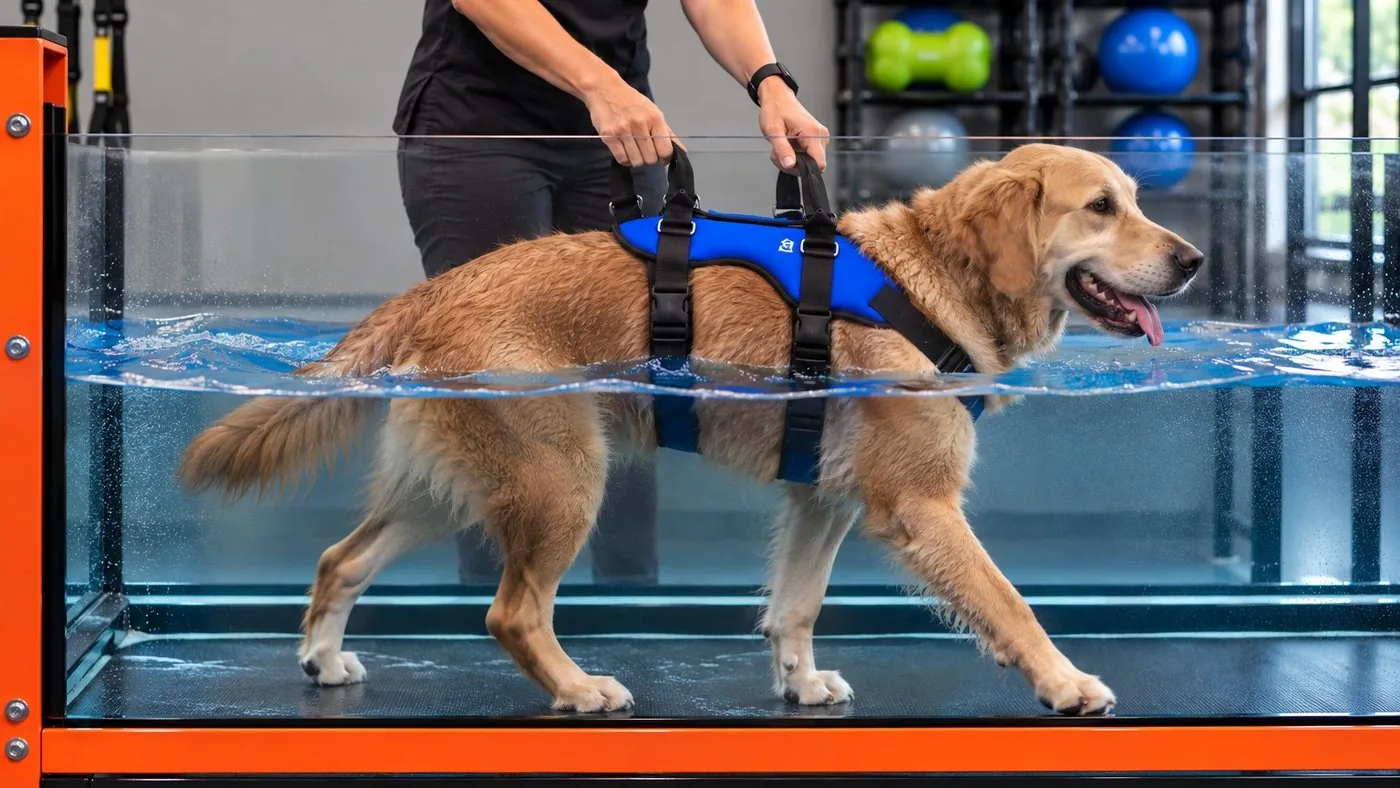
  • Warm-water treadmill work. The water supports much of his weight, so he can build strength without the joints taking the full load.
  • Chiropractic and manual therapy. Gentle work on how the body moves, and on the compensations that build up over time.
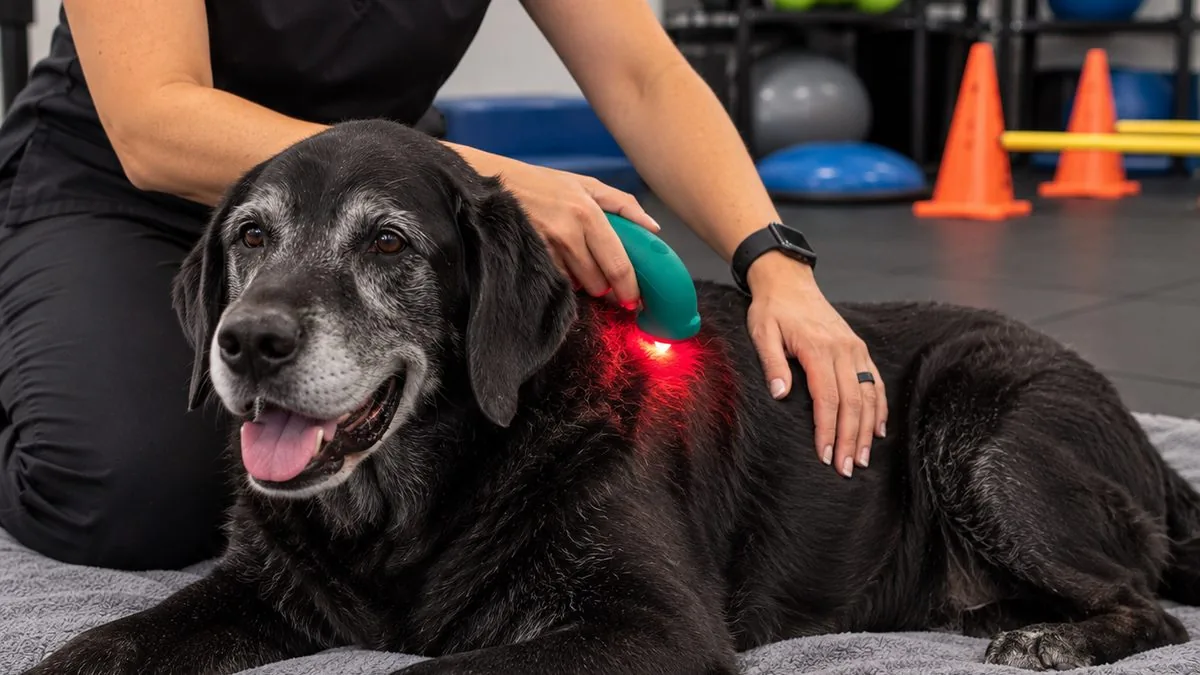
  • Laser and shockwave therapy. Drug-free approaches to the discomfort behind the stiffness.
  • Strengthening exercises. Specific to your dog, with things to continue at home.
  • A weight plan, if it would help. Often the single biggest change to how comfortable an older dog feels.

The aim isn’t to make an old dog young. It’s to help him feel better in the body he has, and hold on to the things he enjoys for longer.

Something to try this week

Cover the slick floors

Put a runner or a yoga mat over the slick floors your dog crosses every day, especially between his bed and the door.

Why it helps so quickly

A dog who’s unsure of his footing braces constantly, and bracing is tiring. Many Pet Parents notice a difference within days, not because anything has healed, but because he’s stopped working so hard just to stand up.

Call 303-388-6886

Questions

Questions we get asked

Is my dog slowing down because of age or because of pain?

Age does change a dog, muscle is slower to build and quicker to lose, and joints carry more wear. But age alone does not usually make a dog favor one side, avoid one specific movement, or flinch at a particular touch. Those are signs of discomfort, and discomfort usually has a source worth finding.

What does slowing down look like in a dog?

Stiffness for the first few minutes after getting up that then eases, taking the stairs more carefully or waiting at the bottom, no longer jumping onto the couch or into the car, turning for home earlier on walks, lying down sooner, less interest in play, and reluctance to be touched in one particular spot. Stiffness that is worse after rest and eases with movement is one of the most common patterns, and one of the most responsive to help.

What can be done for an older dog who has slowed down?

Warm-water treadmill work lets a dog build strength while the water supports much of their weight. Chiropractic and manual therapy address how the body moves and the compensations built up over time. Laser and shockwave therapy are drug-free approaches to the discomfort behind stiffness. Strengthening exercises are tailored to the individual dog, with work to continue at home, and a weight plan often makes the single biggest difference to how comfortable an older dog feels.

Read more

Read more on this

Call 303-388-6886

Treatments

How we may help

See all treatments

Where to start

Speak to your veterinarian first, particularly if any of the signs near the top of this page apply.

Call 303-388-6886