Call 303-388-6886Call us

Rehab 4 Cats

Cats hide pain far better than dogs, so the signs are quieter, fewer jumps onto the counter, a litter box that suddenly gets missed, grooming that stops on one side. We treat cats recovering from injury and surgery, and cats whose movement has changed with age.

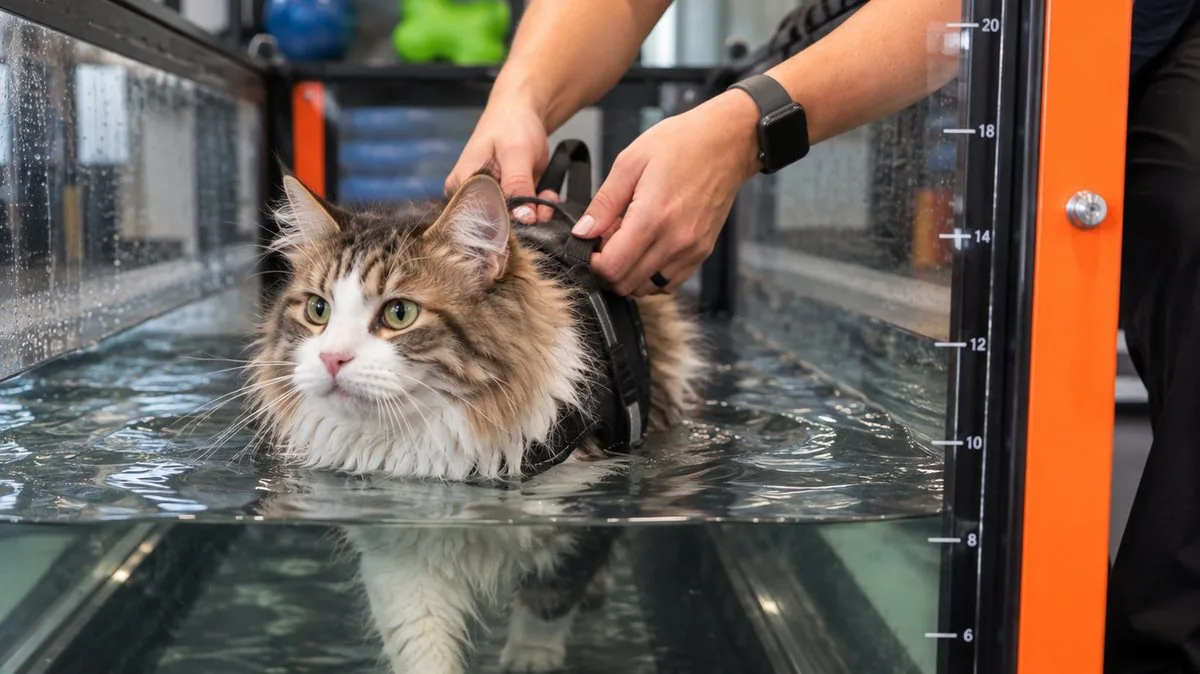
A tabby-and-white longhaired cat walking in the water treadmill in a harness, held gently by a practitioner

Yes, cats really do use the water treadmill

It is the first thing everyone asks, usually with some scepticism. The answer is yes, cats are treated in the tank here regularly.

Cats are not dogs about it. They need more time, more patience and a practitioner who will stop when the cat has had enough rather than push through. But a surprising number settle, and for a cat with sore hips or a weak back end it does the same job it does for a dog, the water takes the weight so the legs can work.

Not every cat will accept it. The ones who do often do remarkably well.

What you might be noticing at home

Cats are experts at not showing pain. They do not limp and complain; they quietly stop doing things. Most of what Pet Parents eventually notice is an absence rather than a symptom.

  • No longer jumping onto the counter, the bed or a favorite windowsill
  • Getting onto furniture in two stages instead of one
  • Missing the litter box, or going beside it
  • Grooming that has stopped on one side, leaving the coat matted there
  • Sleeping somewhere new, usually somewhere lower, or easier to get to
  • Less interested in play, or stopping sooner
  • Grumpy about being picked up or touched in one spot
  • Sitting or lying in an unusual position

A cat who has stopped using the cat tree has usually not lost interest in it. They have usually worked out that getting up there hurts.

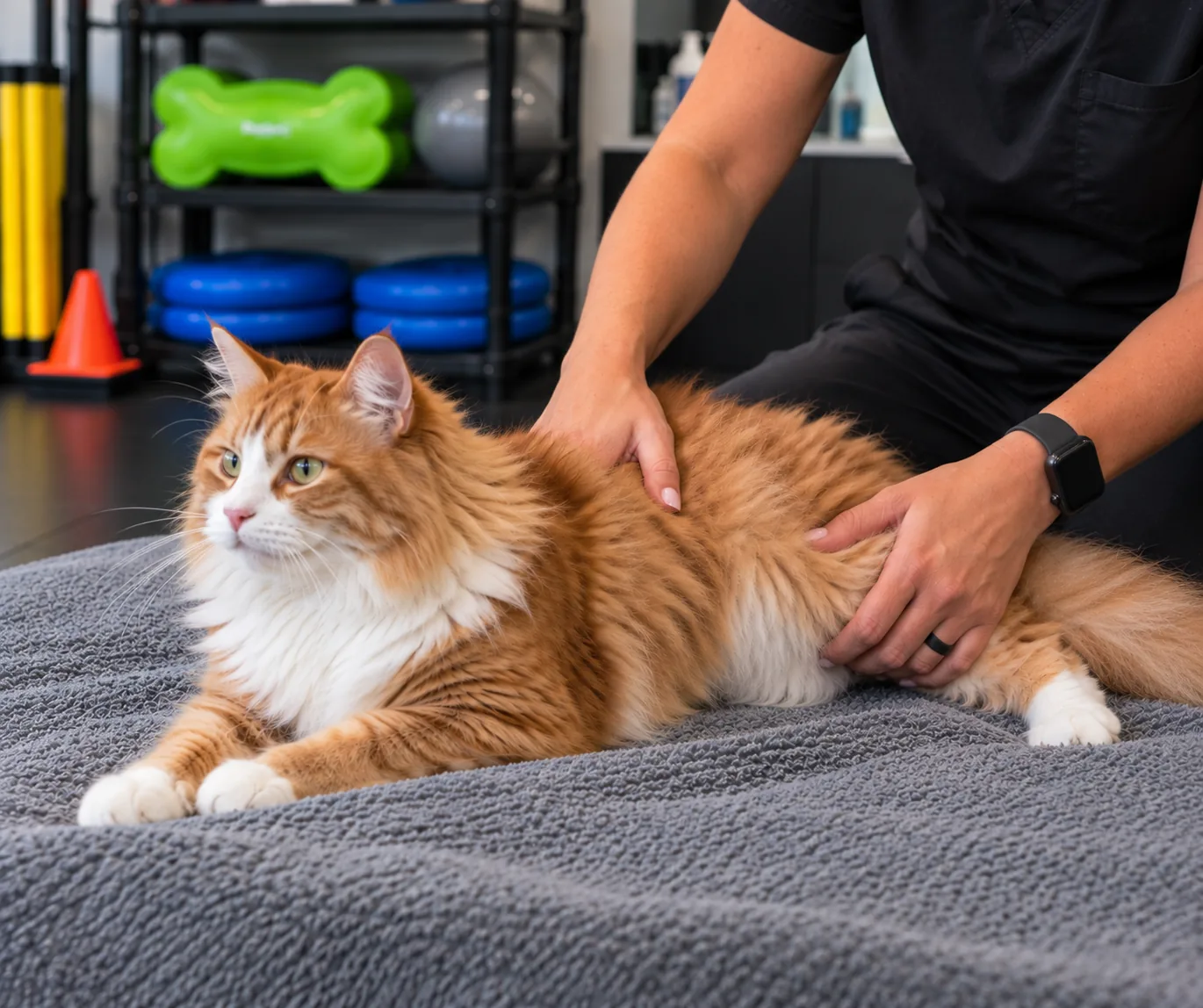
An orange-and-white long-haired cat relaxing on a mat during gentle hands-on therapy

Call 303-388-6886

What we treat in cats

  • Degenerative joint disease and arthritis. Far more common in older cats than most Pet Parents realise, and very easily mistaken for simply slowing down.
  • Lumbosacral disease. Problems where the spine meets the pelvis, which often show up as reluctance to jump and difficulty with the litter box.
  • Recovery after surgery. Orthopedic and neurological procedures, working from your surgeon’s instructions.
  • Neurological conditions. Including weakness and loss of coordination in the back legs.
  • Saddle thrombus. A sudden, serious event that needs a veterinarian immediately, rehabilitation has a role afterwards, in recovery.
  • Incontinence and recurrent urinary problems. Where the underlying issue is partly mechanical.
  • FLUTD. Feline lower urinary tract disease, alongside your veterinarian’s treatment.

As with dogs, we do not diagnose. Your own veterinarian establishes what is going on; we work on how your cat is moving because of it.

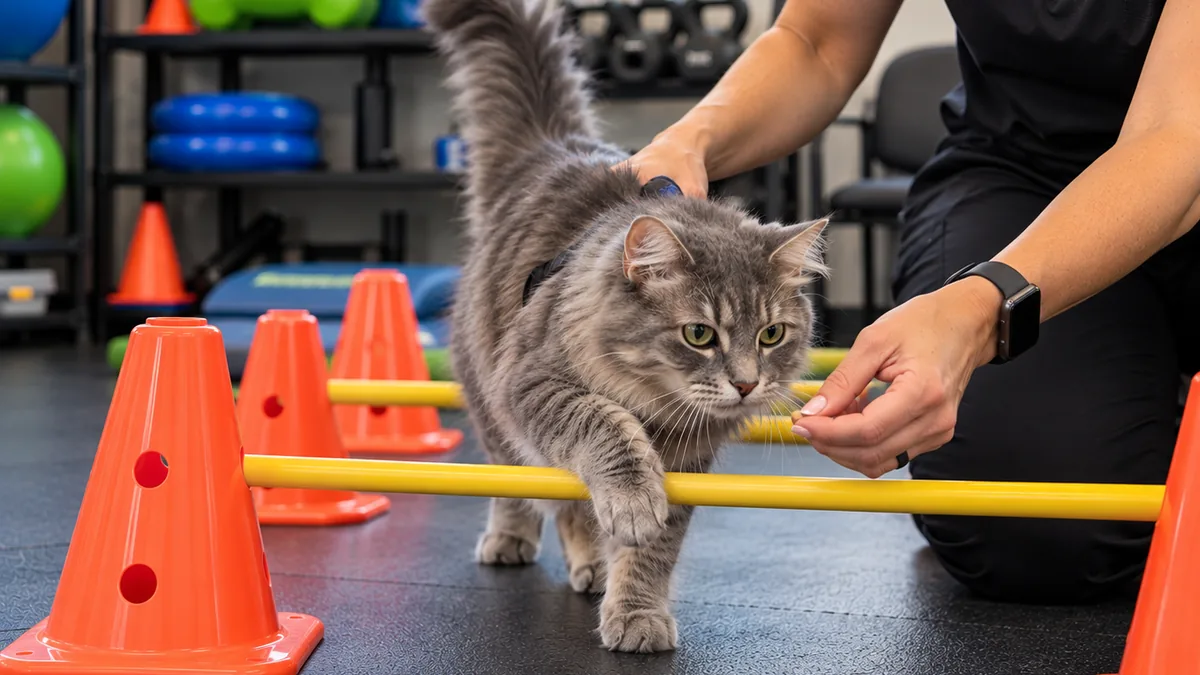
A grey longhaired cat stepping over a low pole between cones while a practitioner guides her with a treat

How a session is different for a cat

Shorter, quieter and on the cat’s terms. Lights down, voices low, and a good deal of waiting.

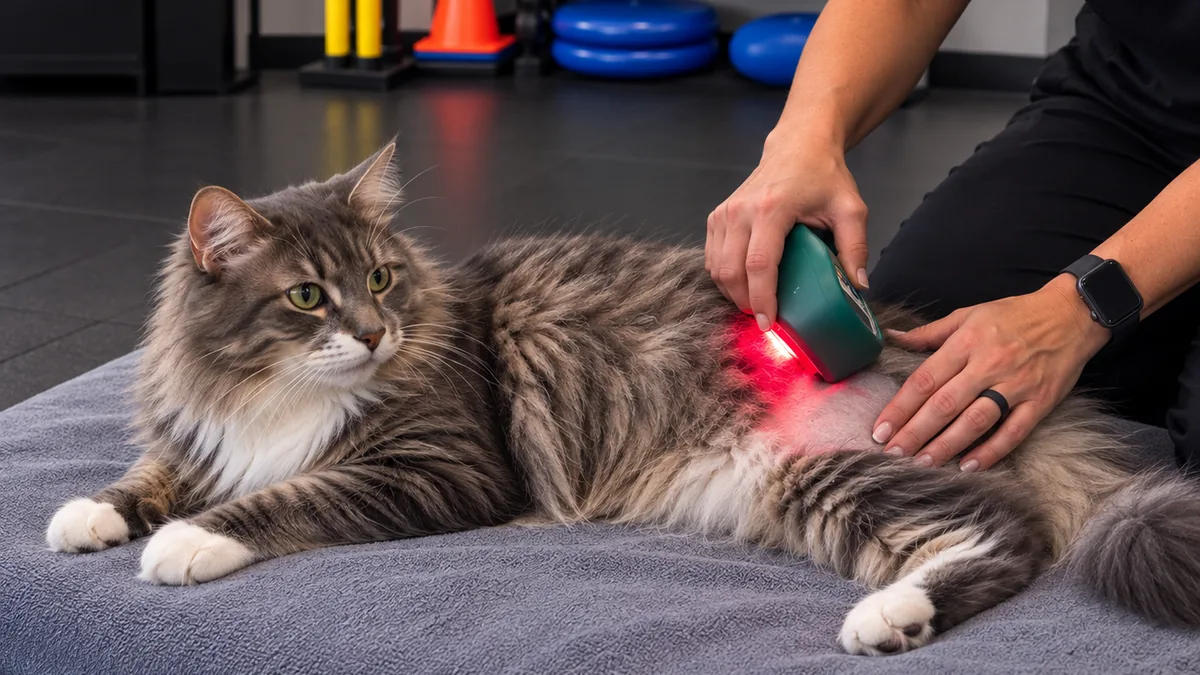
Most of the therapies used for dogs work for cats, laser, magnetic therapy, shockwave, gentle manual work and targeted exercise. What changes is the pace. A cat who is pushed has not been treated, they have been handled, and they remember.

Some cats do better with several very short sessions than one long one. That is a conversation we will have after the first evaluation rather than a rule applied in advance.

A grey longhaired cat lying settled on a towel while a practitioner treats her hip with a laser handpiece

Call 303-388-6886

Getting your cat here

Bring them in the carrier they already know, with something that smells of home in it. If your cat finds the car difficult, tell us when you book, we can often schedule a quieter time of day.

The same Texas rule applies: a veterinary referral is needed before rehabilitation care begins. The form is on this site under Forms, and your own veterinarian signs it.

Questions

Questions we get asked

Can cats really use an underwater treadmill?

Yes, though it depends on the cat. They need more time and patience than dogs and a practitioner willing to stop when the cat has had enough. A surprising number settle, and for a cat with sore hips or a weak back end it does the same job, the water takes the weight so the legs can work.

How do I know if my cat is in pain?

Cats do not limp and complain, they quietly stop doing things. Watch for no longer jumping onto the counter or bed, getting onto furniture in two stages, missing the litter box, grooming stopping on one side, sleeping somewhere lower than usual, and being grumpy about being picked up. A cat who has stopped using the cat tree has usually worked out that getting up there hurts.

What conditions do you treat in cats?

Degenerative joint disease and arthritis, lumbosacral disease, recovery after orthopedic and neurological surgery, neurological conditions including weakness in the back legs, saddle thrombus recovery, incontinence and recurrent urinary problems, and FLUTD alongside your veterinarian’s treatment.

Is treatment stressful for a cat?

It should not be. Sessions are shorter and quieter than for dogs, with the lights down and a good deal of waiting. Some cats do better with several very short sessions than one long one. A cat who is pushed has not been treated, they have been handled, and they remember.

Do I need a vet referral for my cat?

Yes, the same as for dogs. Texas law requires a veterinary referral before rehabilitation care can begin. The form is on this site and your own veterinarian signs it.

Treatments

How we may help

See all treatments

Start with a phone call

Tell us what you’ve noticed. We’ll tell you honestly whether we think we can help.

Call 303-388-6886