Call 303-388-6886Call us

Targeted pulsed electromagnetic field therapy (tPEMF)

PEMF therapy for dogs

PEMF therapy uses a pulsed magnetic field to reduce pain and swelling and support tissue repair. Nothing touches your pet, there is nothing for them to feel, and no drugs are involved. It is used for arthritis, post-surgical recovery and disc disease, and for many pets it can be continued at home.

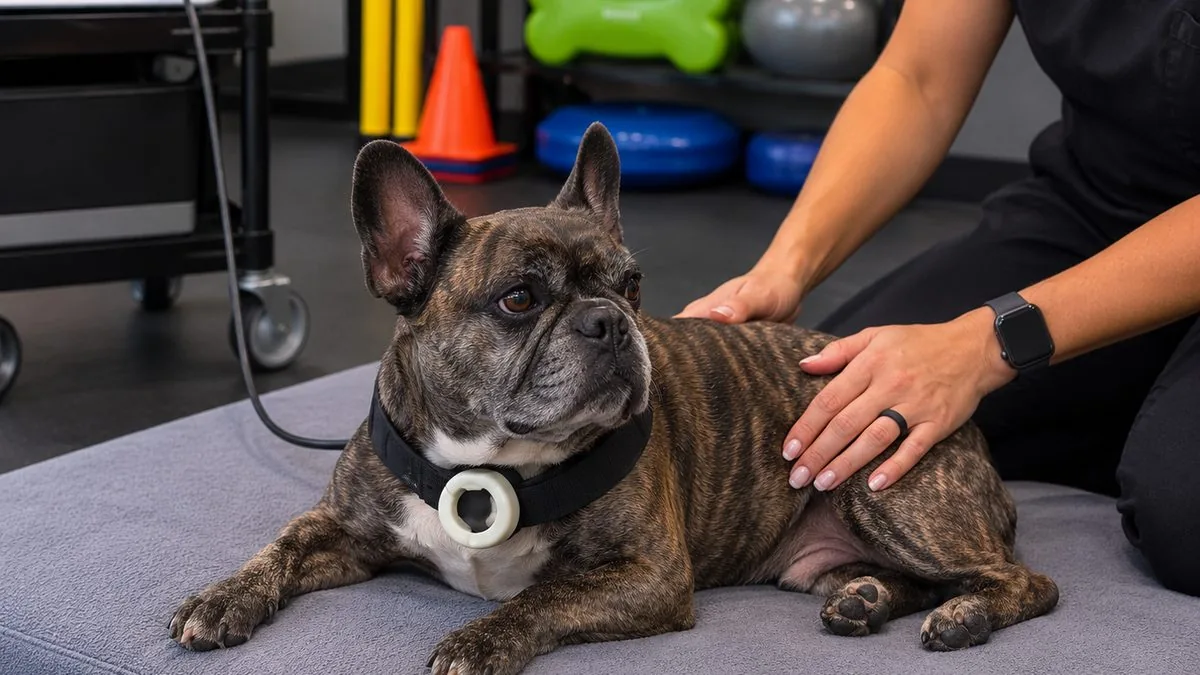
A brindle French Bulldog resting with a small tPEMF loop fitted to his collar

What is PEMF therapy for dogs?

PEMF stands for pulsed electromagnetic field. The version used here is targeted pulsed electromagnetic field therapy, or tPEMF, the same principle, delivered at a specific low energy over a longer session.

Specific energy parameters are transmitted through injured tissue to target the affected area by direct induction. That induces a tiny electrical signal, one that mimics the stimulus which normally occurs in healthy tissue, and that signal is what prompts cellular repair.

Put less technically: it nudges an area back toward the signaling pattern it would have if it were healthy, so the body gets on with repairing it. The devices used for this are FDA cleared, and the underlying technology has been studied for around three decades.

Nothing touches your pet. There is nothing to feel, and most dogs sleep through it.

What conditions does it help with?

  • Pain and swelling after surgery. One of the most common uses, and the one where being drug-free matters most. See recovery after surgery.
  • Osteoarthritis and degenerative joint disease. For the long-term ache that is managed rather than fixed, where something you can do often is worth more than something stronger done rarely.
  • Tendon and ligament damage. Including the slow-healing injuries that have stalled and stopped improving on their own.
  • Soft tissue trauma and wound care. Where tissue needs to knit back together.
  • Bone union and growth. Supporting bone that is in the process of healing.
  • Intervertebral disc disease (IVDD). Used as one part of a wider plan rather than on its own.
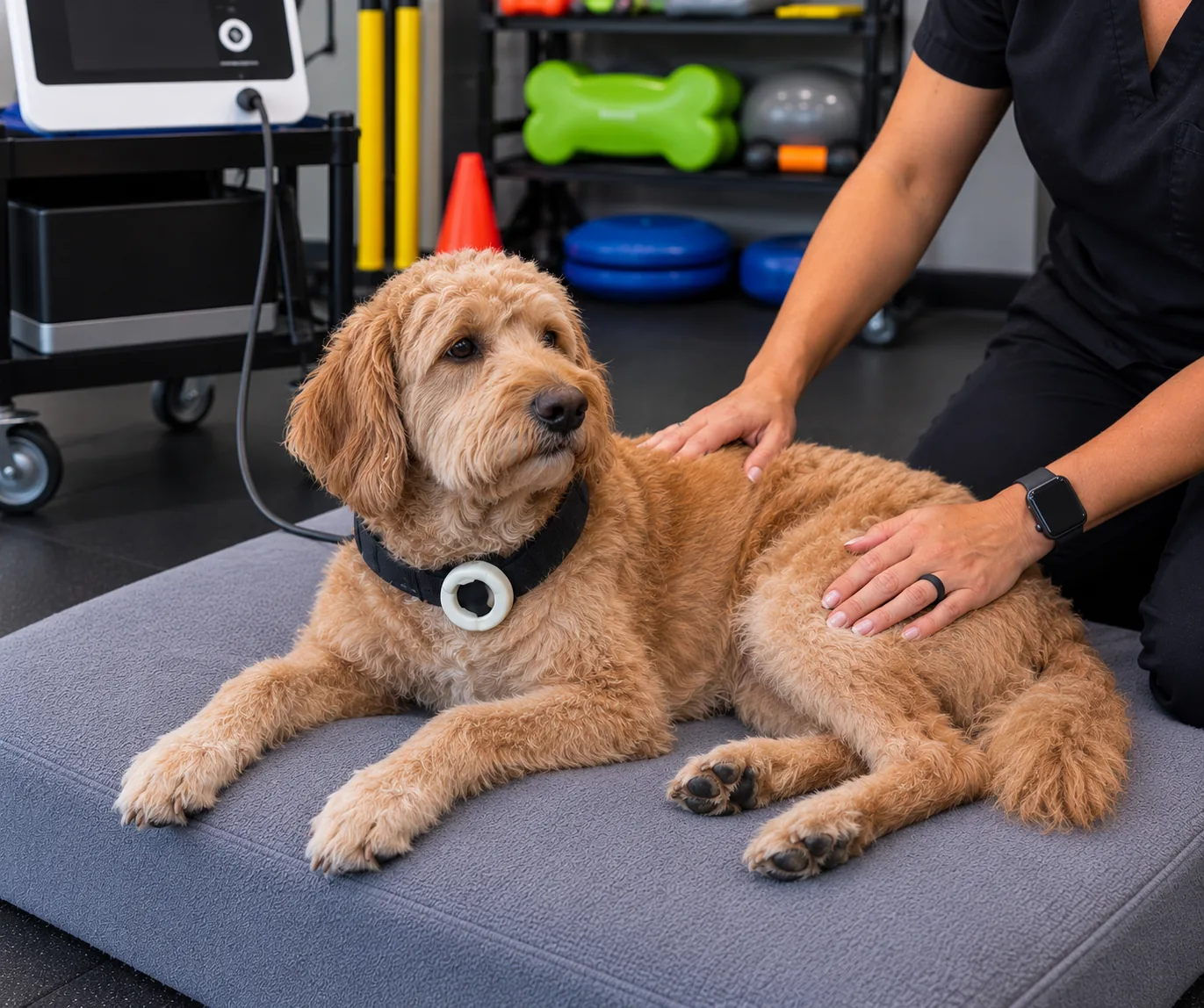
An apricot curly-coated dog resting on a mat with a small PEMF loop on his chest strap

Call 303-388-6886

Does PEMF therapy hurt?

No. There is nothing to feel. The device does not need to touch the sore area, there is no heat, no noise and no sedation, and most pets settle or fall asleep during a session.

That matters more than it sounds. A pet who is sore and guarded will not tolerate much hands-on work, and this is one of the few things that can be done on day one regardless.

How is tPEMF different from EMTT?

Both are magnetic therapies and the names run together easily, but they do different jobs. EMTT is higher energy over a shorter session and is delivered here in the clinic. tPEMF is lower energy over a longer one.

That difference is the whole reason tPEMF suits home use and EMTT does not. A longer, gentler treatment can happen on a dog bed in your living room; a short high-energy one needs the equipment here.

If you want the two side by side, the magnetic therapy page compares them.

Call 303-388-6886

Can I use PEMF on my dog at home?

Often, yes. It is one of the few therapies that carries on between appointments, which matters for the conditions where frequency does more good than intensity, arthritis above all.

Whether it suits your pet, and what the schedule should be, is worked out at the evaluation rather than decided in advance. We would rather set it up with you properly than hand over a device and a leaflet.

How does it fit with everything else?

Rarely on its own. Most sessions combine several things, and this is frequently the one that makes the rest possible, settling pain and swelling enough that hands-on work, the water treadmill or exercise can begin.

Pets with mobility problems usually have a primary problem and a set of compensations built on top of it, so the plan addresses both.

Which therapies your pet needs is decided at the first appointment, which is a rehabilitation evaluation rather than a diagnostic medical assessment. Your own veterinarian manages the medical diagnosis.

Call 303-388-6886

Questions

Questions we get asked

What is PEMF therapy for dogs?

PEMF is pulsed electromagnetic field therapy. A pulsed magnetic field passes through injured tissue and induces a tiny electrical signal that mimics the one healthy tissue produces naturally, which prompts cellular repair. It is drug-free and non-invasive, and nothing touches your pet.

Does PEMF therapy actually work for dogs?

The technology has been studied for around three decades and the devices are FDA cleared. It is most used for post-operative pain and swelling, arthritis, tendon and ligament injuries, wound healing and disc disease. It is one part of a plan rather than a cure on its own, and whether it suits your pet is decided at the evaluation.

Does it hurt?

There is nothing to feel. No heat, no noise, no sedation, and the device does not need to touch the sore area. Most pets settle or sleep through a session.

What is the difference between PEMF and tPEMF?

tPEMF is targeted pulsed electromagnetic field therapy, the same principle delivered at a specific low energy over a longer session. It is the version used here, and the one that can often be continued at home.

What is the difference between tPEMF and EMTT?

EMTT is higher energy over a shorter session and is done in the clinic. tPEMF is lower energy over a longer session, which is why it can usually be continued at home. They are used for different things and sometimes both.

Can I do PEMF on my dog at home?

Often, yes, it is one of the therapies that can carry on between visits, which helps most with arthritis and other long-term conditions. How often it should be done is worked out at the evaluation.

Is PEMF therapy safe for dogs?

It is non-invasive and drug-free, and it is generally very well tolerated. As with anything, tell us and your veterinarian about your pet’s full history before starting, so it can be checked against their situation.

Often used together

Related treatments

See all treatments

Start with a phone call

Tell us what you’ve noticed. We’ll tell you honestly whether we think we can help.

Call 303-388-6886