Heat and cryotherapy
Cold in the first 72 hours after an injury, warmth once that early phase has passed. That is the short answer, and getting the order right matters, heat on a fresh injury can make swelling worse. Both are cheap, need no special equipment, and are often the part of a plan you can do every day at home.

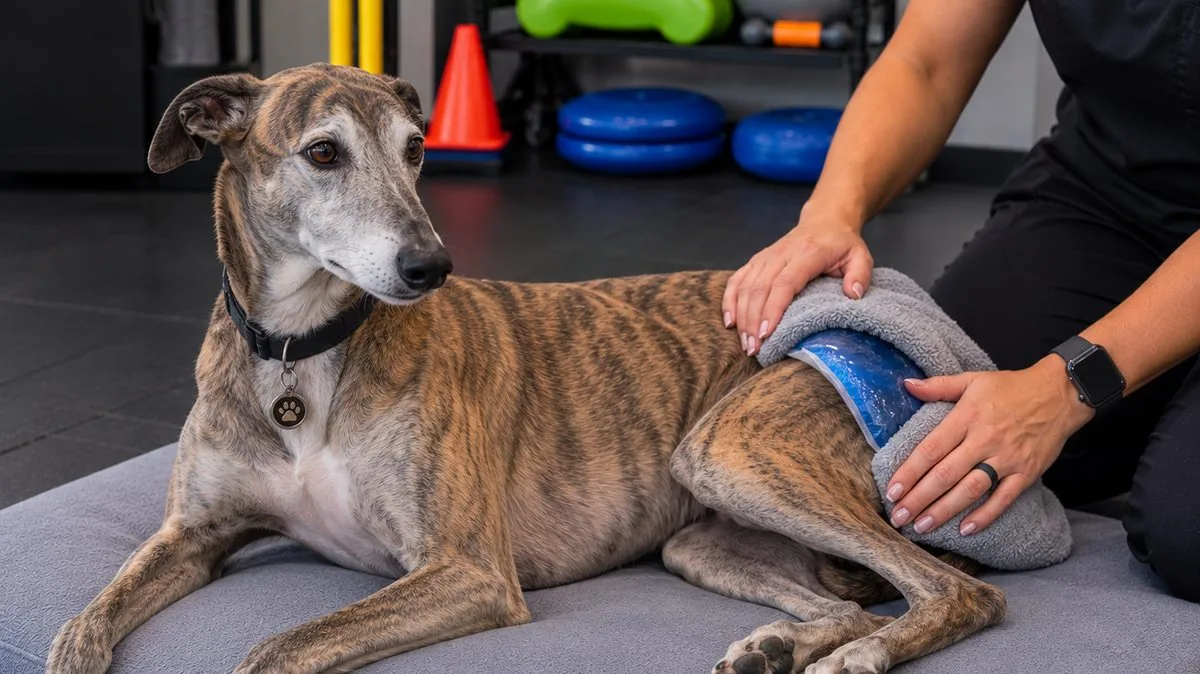
Cold first. Cryotherapy is used during the initial phase of an injury, roughly the first 72 hours, to minimize tissue damage, pain and swelling. That early window is when the most can be prevented.
Heat comes in once that initial phase has resolved. Used too early, it increases blood flow to an area that is already swelling, which is the opposite of what you want.
Cold also stays useful well past those first days. Through a course of rehabilitation it is often used after a session, to settle the secondary inflammation that follows working a sore area.
Ice is not just for the day it happened. It has a job through the whole recovery.
Short sessions, always with a layer between the pack and the skin, and check underneath partway through. Ice straight onto skin can burn, and a pet who cannot move away from it is at more risk than a person would be.
The exact timing depends on your pet, the injury and where they are in it, so we give you specifics and write them into your home program rather than leaving you to guess.

Not an electric one left unattended, and not on a fresh injury. Dogs can and do get burns this way, particularly older dogs, dogs who cannot easily get up and move off, and dogs whose sensation is reduced by a neurological condition.
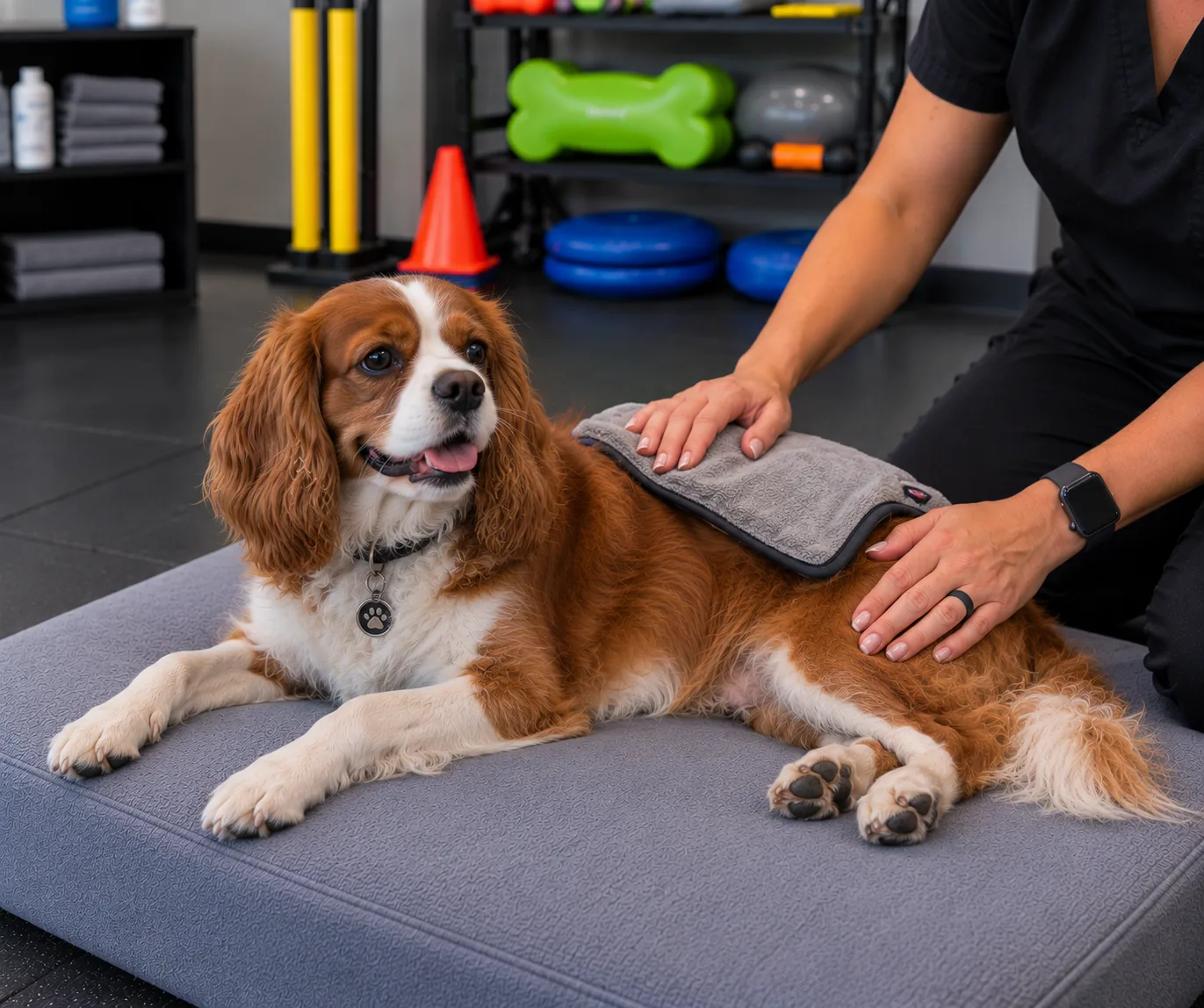
A rice, gel or clay pack, or a damp warm washcloth, is safer because it cools down on its own rather than holding a constant temperature. Warm, not hot, if it is too warm for the inside of your wrist, it is too warm for your dog.
The pet most likely to be burned is the one least able to get up and walk away from it.

Nothing here needs buying. For cold: ice, a bag of frozen peas or corn wrapped in a towel, or a moldable gel pack. For warmth: a rice, gel or clay pack, or a damp washcloth or towel.
Being cheap and easy is the point. This is usually the part of the plan a Pet Parent can do every day between visits, and the daily part is what tends to move things.
Ask us which one your pet needs, when, and for how long. Hot and cold are simple, but the wrong one at the wrong stage can set a recovery back, and a burn is a genuine risk with a pet who cannot move away. We will show you on the day and write it into your home program.
Cold during the initial phase of an injury, roughly the first 72 hours, to limit tissue damage, pain and swelling. Heat once that early phase has resolved. Heat on a fresh injury can increase swelling, so the order matters.
Short sessions, with a layer between the pack and the skin, checking underneath partway through. The exact timing depends on your pet and the injury, so we give you specifics and write them into your home program.
Not an electric one left unattended, and never on a fresh injury. A rice, gel or clay pack or a damp warm washcloth is safer because it cools on its own. Older dogs, dogs who struggle to get up, and dogs with reduced sensation are most at risk of burns.
Ice, a bag of frozen peas or corn wrapped in a towel, or a moldable gel pack. Nothing specialized, which is rather the point.
No. It matters most in the first 72 hours, but it stays useful throughout rehabilitation to settle the secondary inflammation that can follow a session.
Used at the right stage, yes, for swelling, pain, muscle spasm, and for flexibility and joint range of motion before exercise. It is a small part of a plan rather than a treatment on its own, but it is the part you can do every day.

Currents that reach chronic pain sitting below the surface, where a hot pack can’t.
Read more
Hands-on muscle work for dogs who have been compensating for something painful.
Read more
Targeted strengthening, plus a home program you can continue between visits.
Read moreTell us what you’ve noticed. We’ll tell you honestly whether we think we can help.