Hydrotherapy
Hydrotherapy focuses on using the buoyancy of water to allow for better movement patterns. Because the water carries much of your pet’s weight, they can walk properly, and keep walking for longer, before their joints could manage the same work on land.

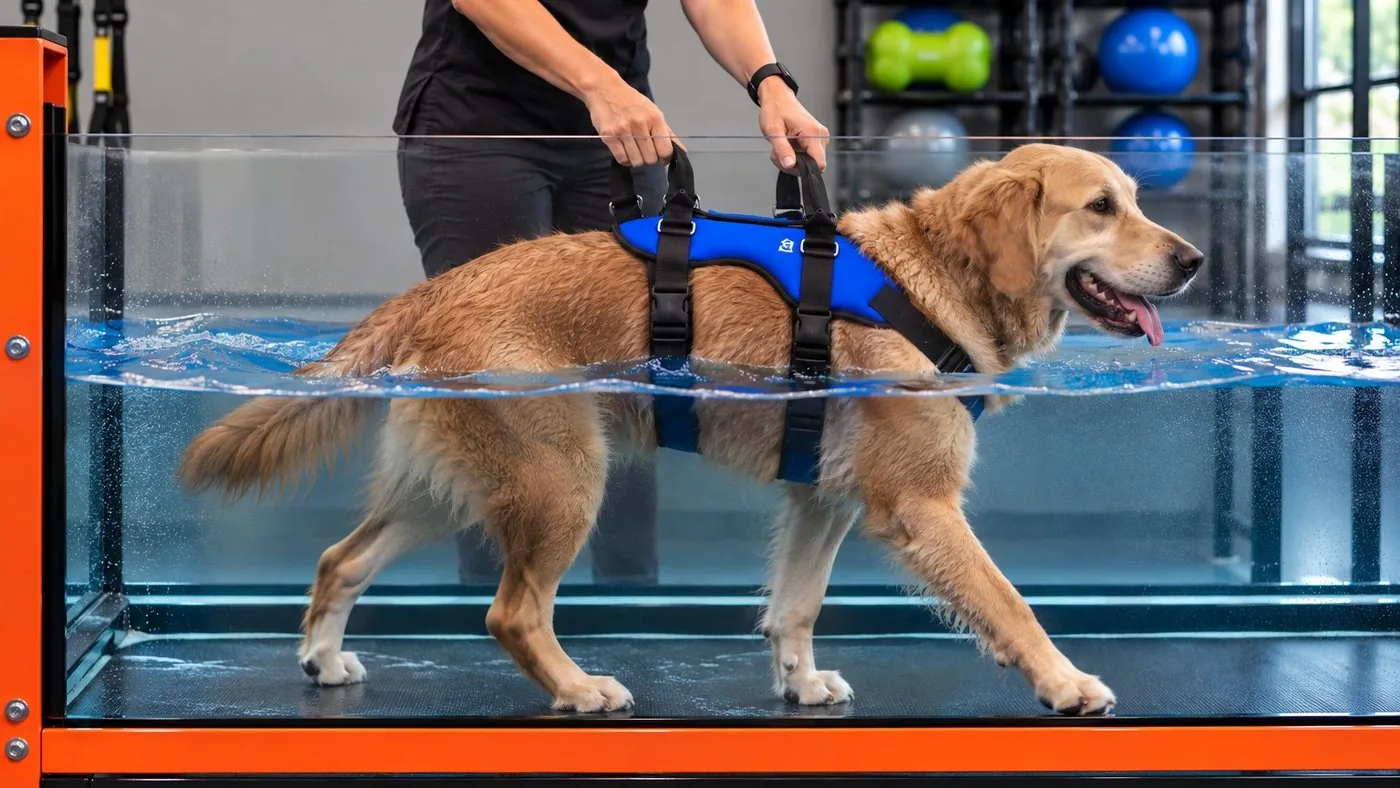
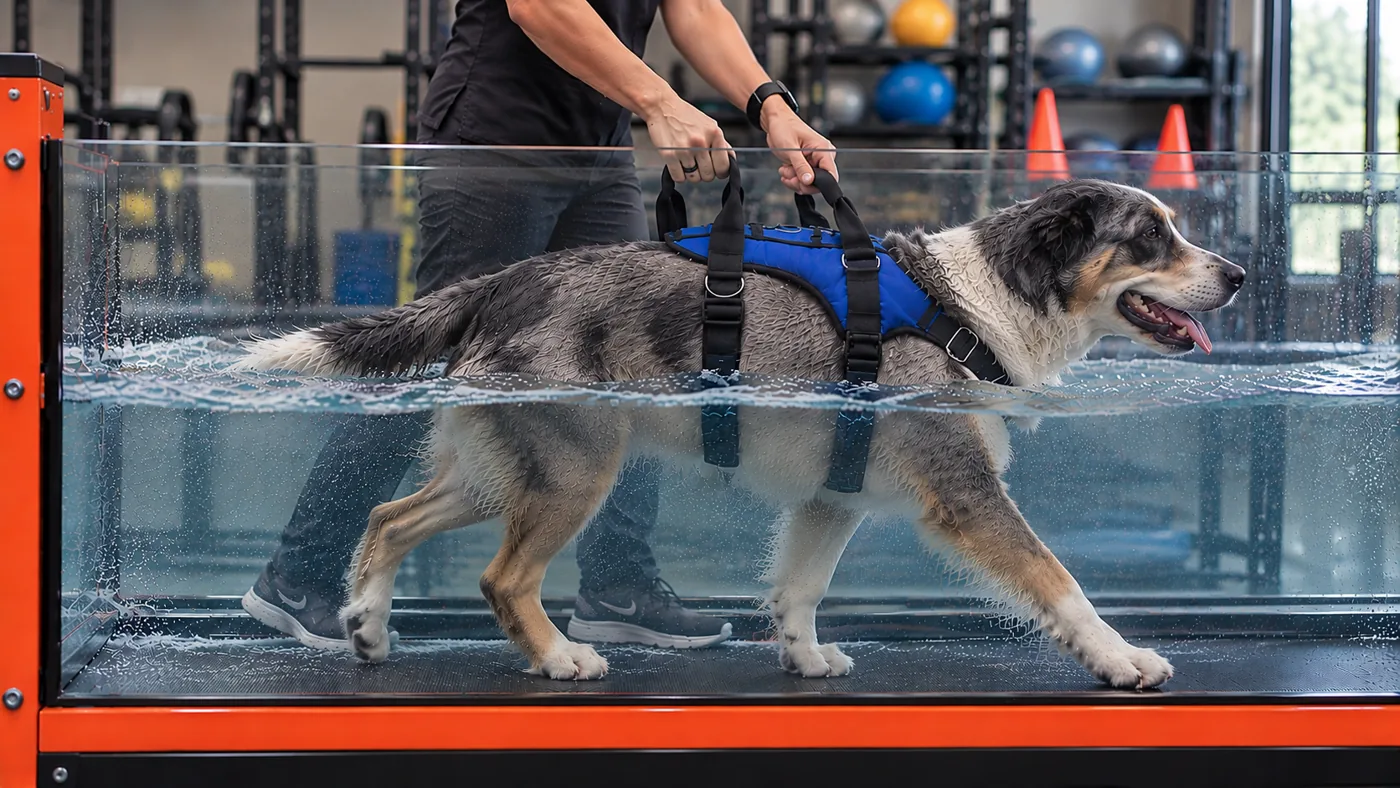
A treadmill inside a glass tank. Your dog walks on it while the tank fills with warm water to a depth chosen for them, sometimes to the hock, sometimes to the chest, depending on how much help they need.
The point is buoyancy. Water carries a large share of your dog’s weight, so the legs can move properly while the joints take far less load than they would on the floor. A dog who struggles to walk the length of a hallway can often walk steadily for several minutes in the tank.
Three things are happening at once, and that combination is hard to reproduce any other way.
There is also something less measurable. Dogs who have stopped trusting a leg often use it in the tank before they will use it on land, and that often carries over.

Your dog walks into the tank on a ramp and the door closes behind them. The water rises slowly. Most dogs are curious rather than worried, and a practitioner is in the tank with them or beside it the whole time.
Speed and water depth are set for your dog and adjusted as they improve. Sessions are short to begin with, a few minutes of actual walking is real work for a dog who has been compensating for months.
First time in, some dogs need a few minutes to decide the water is fine. That is normal and nobody is rushed.

It is not right for every dog or every stage. Open wounds, some heart conditions and certain infections rule it out, which is part of what the first evaluation is for.
A practitioner stays with your dog throughout, the water level is set for their size and condition, and the speed starts slow. Most dogs settle within the first session. It is not suitable for every dog, open wounds, some heart conditions and certain infections rule it out, which is why the first appointment is an evaluation.
Usually once the wound has healed. Most of the time skin staples and sutures come out at around two weeks, and if the wound is healed, treadmill work can begin then. We follow your surgeon’s instructions on timing.
No. This is walking, not swimming. Your dog’s feet stay on the treadmill belt the whole time and the water is only as deep as it needs to be.
It depends entirely on what we are working on. Some dogs come for a short block after surgery; dogs with progressive conditions may come regularly for a long time. The evaluation sets a plan with something measurable in it, and we will tell you honestly when we think more visits are not the right thing.

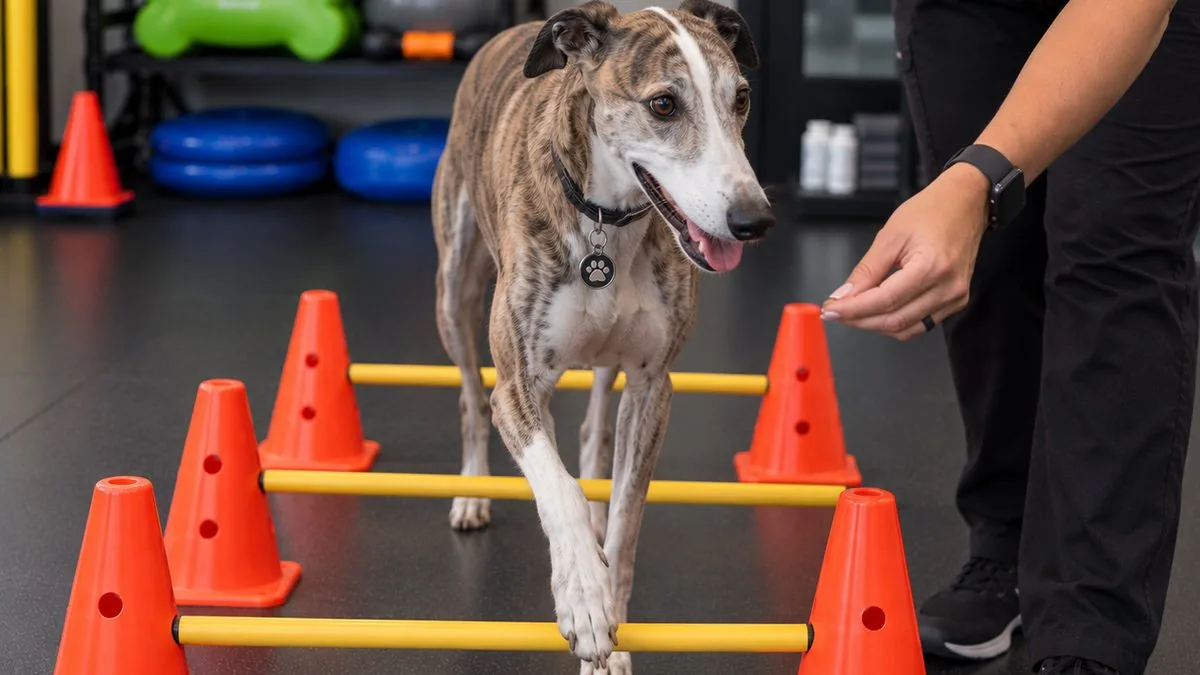
Targeted strengthening, plus a home program you can continue between visits.
Read more
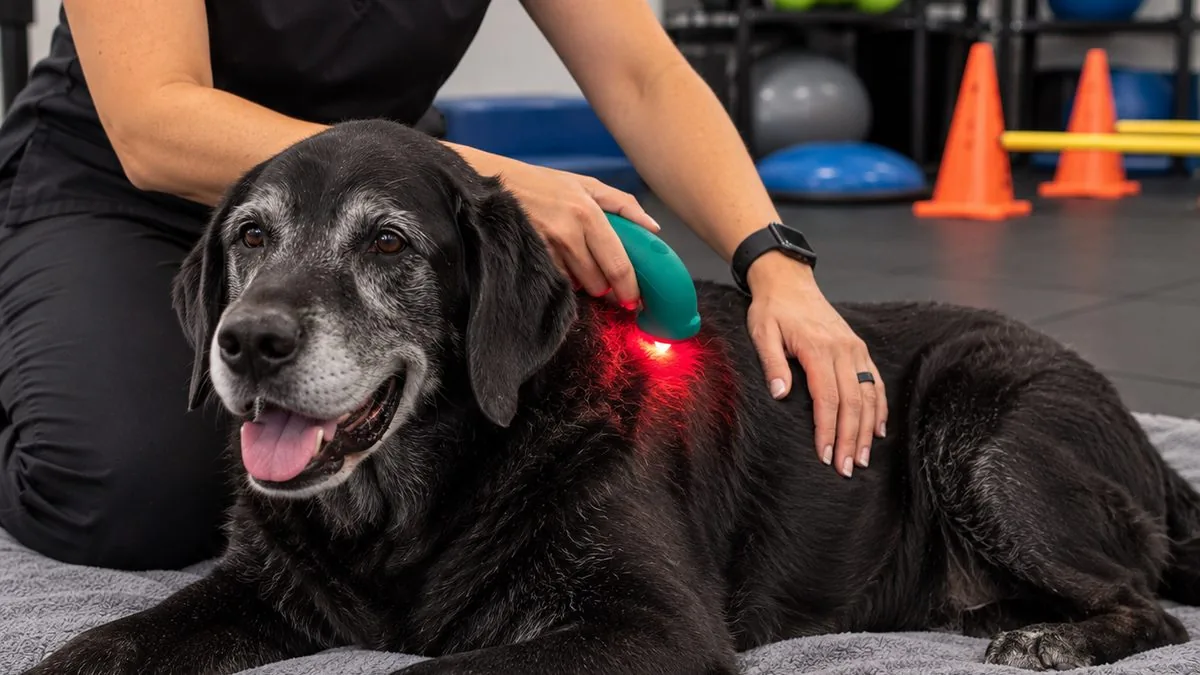
Light that reaches deep into tissue without damaging it. Most pets settle and doze through it.
Read more
Less weight on sore joints, built around what your veterinarian recommends.
Read moreTell us what you’ve noticed. We’ll tell you honestly whether we think we can help.