Start here
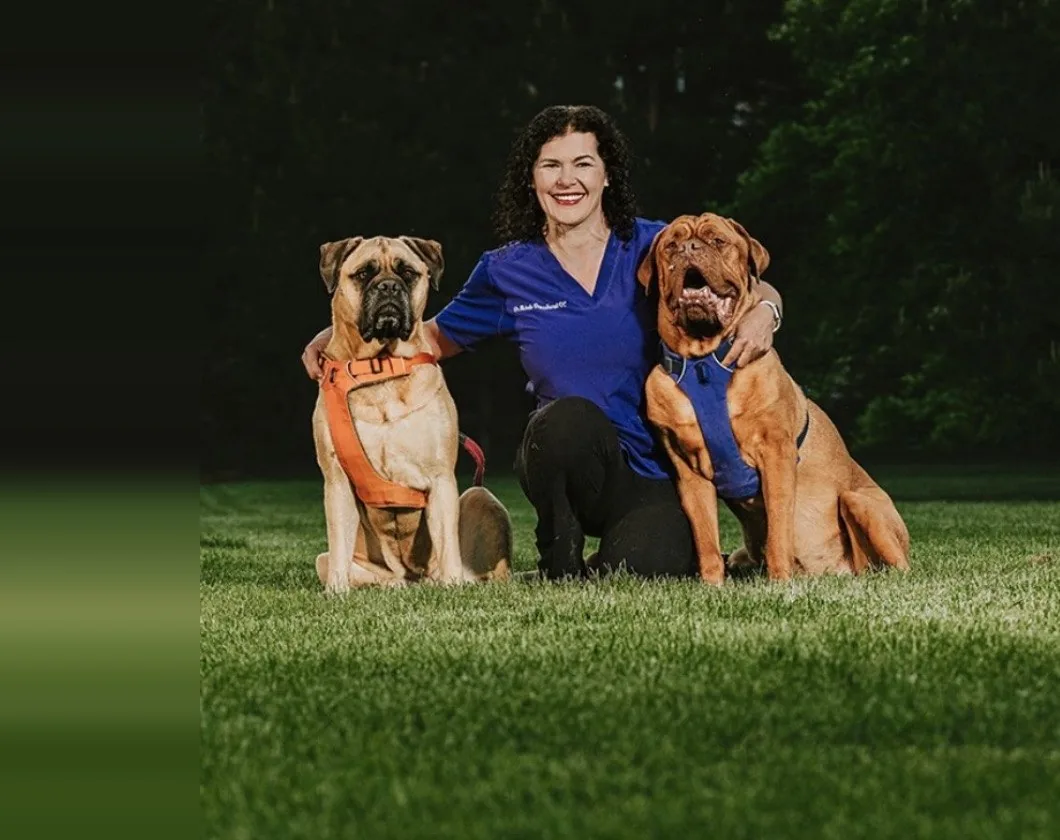
Rehabilitation and chiropractic care for dogs and cats in Colleyville, Texas. Led by Dr. Michele Broadhurst.
You know your dog. You know how he gets up in the morning, how he takes the stairs, whether he still meets you at the door the way he used to.

So when something shifts, you notice, even when it’s small, and even when you can’t quite name it. Most Pet Parents who call us start the same way: I don’t know exactly what’s wrong. He’s just not himself.
That’s enough to go on. This page is here to help you make sense of what you’re seeing.
Any of these are worth paying attention to:
None of these mean something is seriously wrong. All of them are worth understanding rather than waiting out.
Age is real. Dogs slow down, and there’s nothing wrong with that.
But age on its own doesn’t usually make a dog stiff on one side, or unwilling to use a particular leg, or reluctant to do one specific thing he used to do easily. More often something is uncomfortable, and the dog has quietly changed how he moves to work around it.
The difficulty is that dogs are good at hiding this. They don’t limp until they have to. By the time it’s obvious, they’ve often been compensating for a while, and that compensation can create its own aches somewhere else.
Which is why noticing early, the way you have, matters more than most Pet Parents realize.
Rehabilitation sits between “wait and see” and surgery. It’s the part many Pet Parents don’t know exists.
It can involve gentle chiropractic care, work in a warm-water treadmill where the water carries some of your dog’s weight, laser and shockwave therapy, targeted strengthening, or a plan for what to do at home. Usually it’s a combination, built around your particular dog.
What it aims for is comfort and movement, helping a dog use his body more easily, and hold on to the things he still enjoys for as long as possible.
It isn’t a cure, and nobody here will promise you an outcome. But for a great many dogs, it makes a real difference to how they feel day to day.
If one of these sounds closer to what you’re seeing, start there instead:
Weak, wobbly, or dragging. Read more →
Stiff, tiring sooner, less interested in walks. Read more →
There are three steps, and the first one is a phone call.
Tell us what you’ve noticed. No appointment needed to have that conversation.
In Texas a vet has to sign off before rehabilitation care can begin. The form is on this site under Forms, you can print it or send your vet the link, and they return it signed. It’s a normal step and your vet will be familiar with it.
Dr. Broadhurst watches how he moves, examines him properly, and talks you through what she’s seeing and what may help. You’ll leave that first visit understanding your dog better than you did walking in, whatever the plan turns out to be.
Rehab 4 Pets is a rehabilitation practice in Colleyville, serving Southlake, Grapevine, Keller and the surrounding mid-cities.
It’s led by Dr. Michele Broadhurst, a Certified Canine Rehabilitation Practitioner through the University of Tennessee, a credential held by very few practitioners worldwide. She’s spent her career helping working dogs, sporting dogs and senior dogs move more comfortably, and she works alongside your veterinarian rather than in place of them.
Tell us what you’ve noticed. We’ll tell you honestly whether we think we can help.