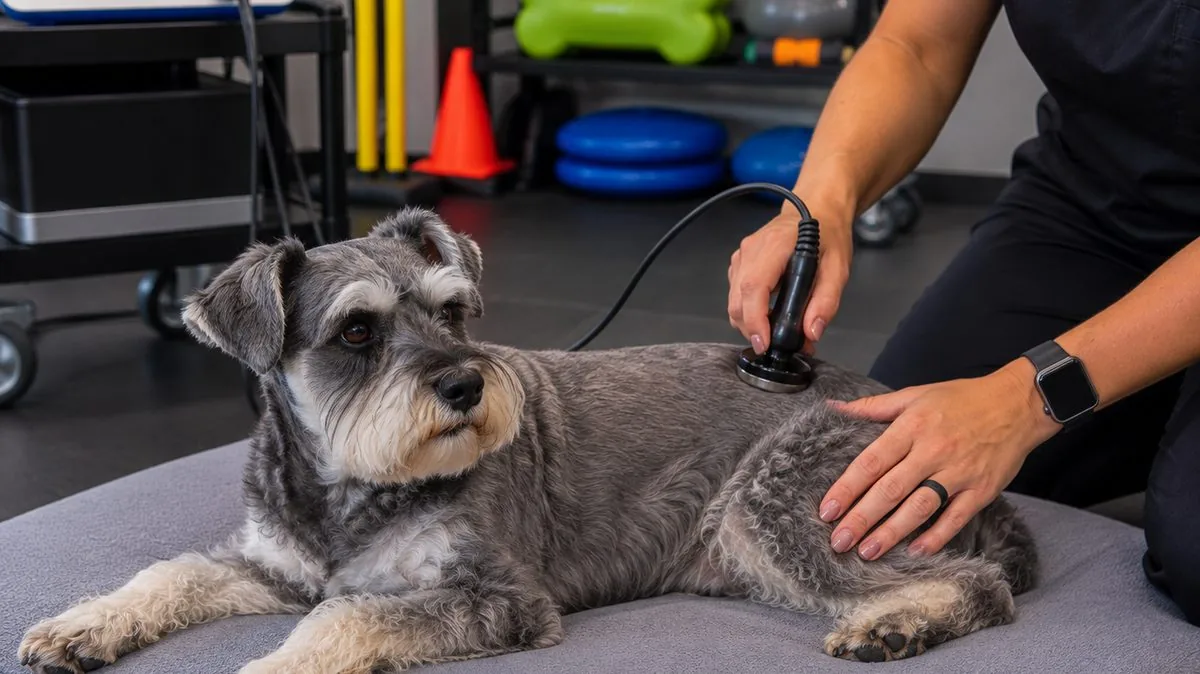
Canine therapeutic massage
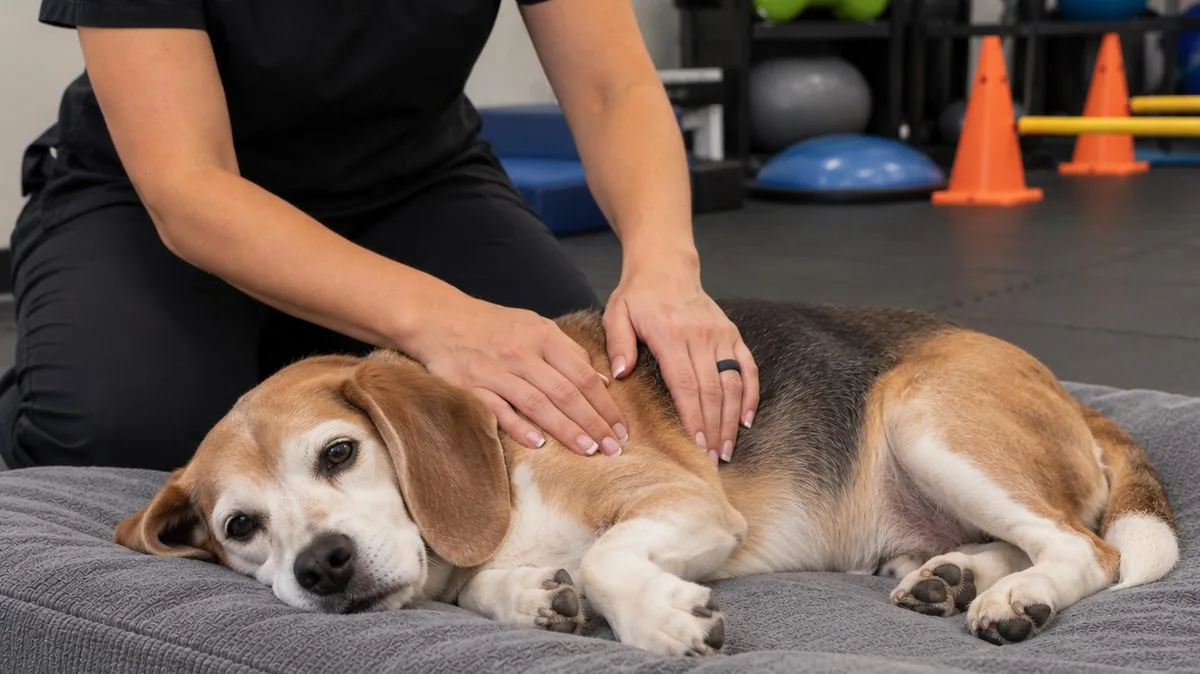
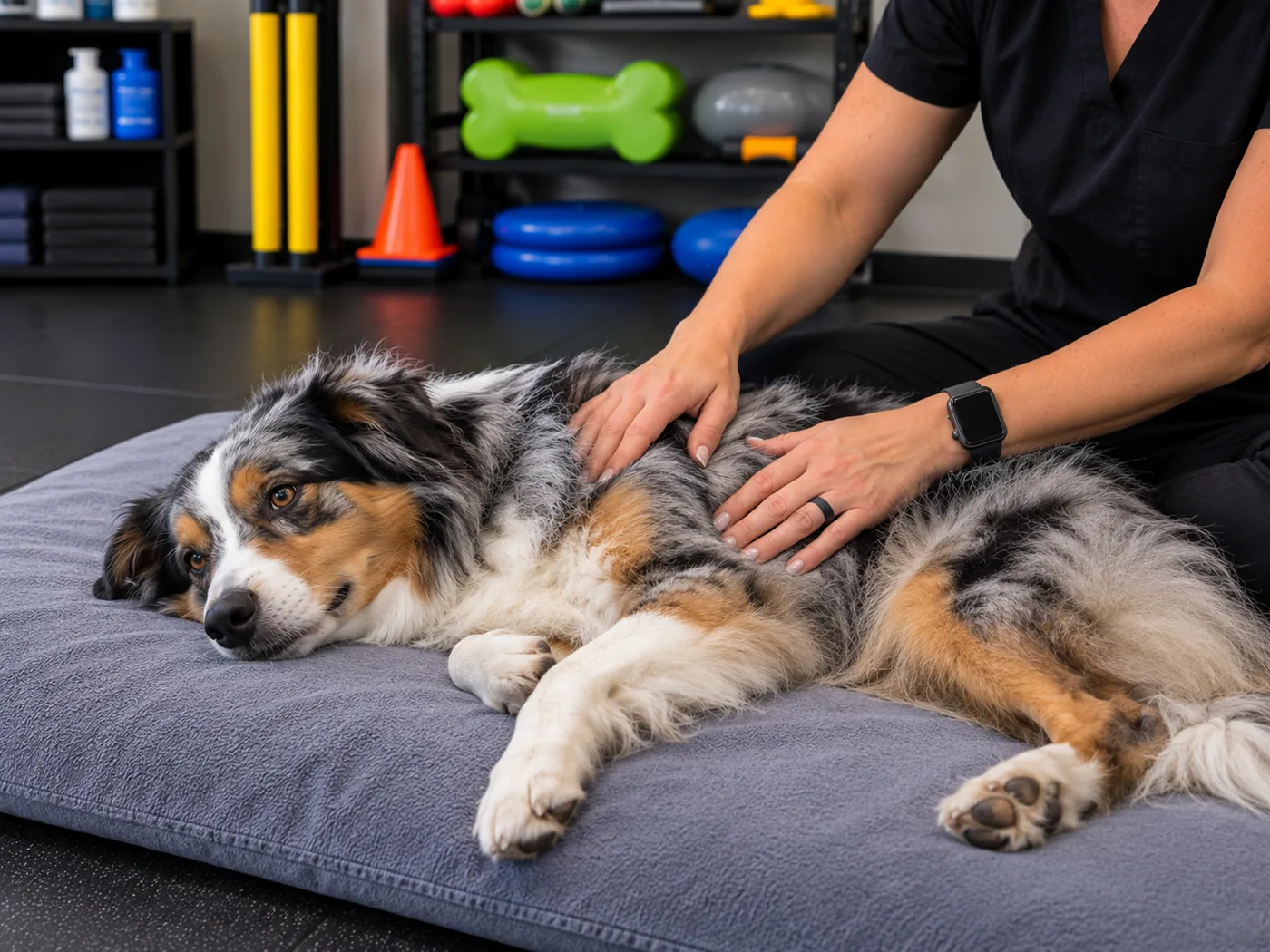
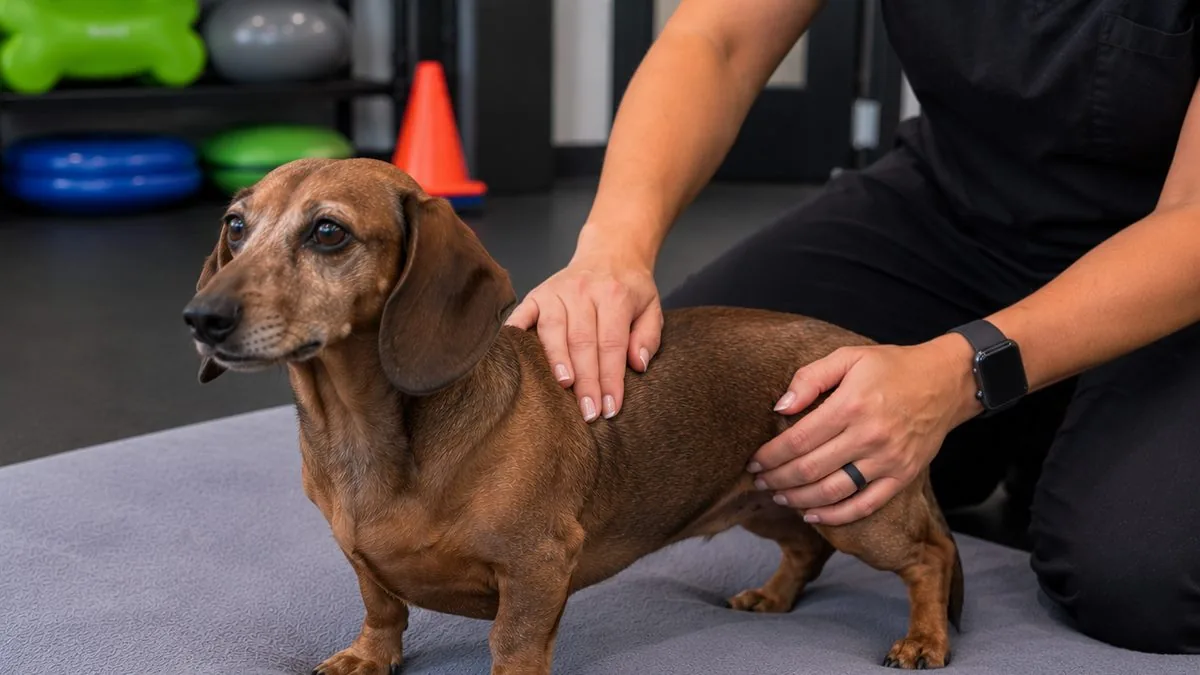
Canine massage is the science and art of stimulating the muscles. In a rehabilitation setting it has a specific job: releasing the tight, overworked muscle a dog builds up while compensating for something that hurts. It is used alongside the rest of a session rather than on its own.

When something hurts, a dog stops using it properly and starts using everything else differently. Weeks of that leaves tight, overworked muscle a long way from the original problem, a dog with a sore back end often has a rigid neck and shoulders doing the extra work.
Addressing that is not cosmetic. A dog who is braced and guarded cannot move freely enough to get the benefit of anything else in the plan.
Pets with mobility problems usually have a primary problem and a pile of compensations built on top of it. Much of that compensation lives in muscle.
Usually before the harder work. Warming and releasing tight tissue first tends to mean the hands-on treatment, chiropractic or exercise that follows achieves more and is better tolerated.
It is also used the other way round, at the end, to settle muscle that has been asked to do something new.

The principle is similar. The difference is that it is done with an understanding of how a dog is built and what this particular dog is compensating for, and it is working toward a goal in a plan rather than offered as a treat.
It is commonly used for dogs with arthritis, dogs recovering from surgery, and older dogs who have been slowing down and quietly changing how they move.
Canine massage is the science and art of stimulating the muscles. In rehabilitation it is used with a specific purpose, releasing the tight, overworked muscle that builds up when a dog has been compensating for something painful.
It is commonly used as one part of an arthritis plan. An arthritic dog changes how they move to protect a sore joint, and the muscle doing that extra work becomes tight and sore in its own right. Whether it helps your dog is assessed at the evaluation.
It is usually part of a session rather than a standalone appointment, because it works best combined with the other things being done that day. Call and ask, the answer depends on your pet.
The principle is similar, but it is done with an understanding of how a dog is built and what they are compensating for, and it is working toward a goal rather than offered as a treat.

Hands-on work to restore movement where the spine and limbs have stopped moving well.
Read more
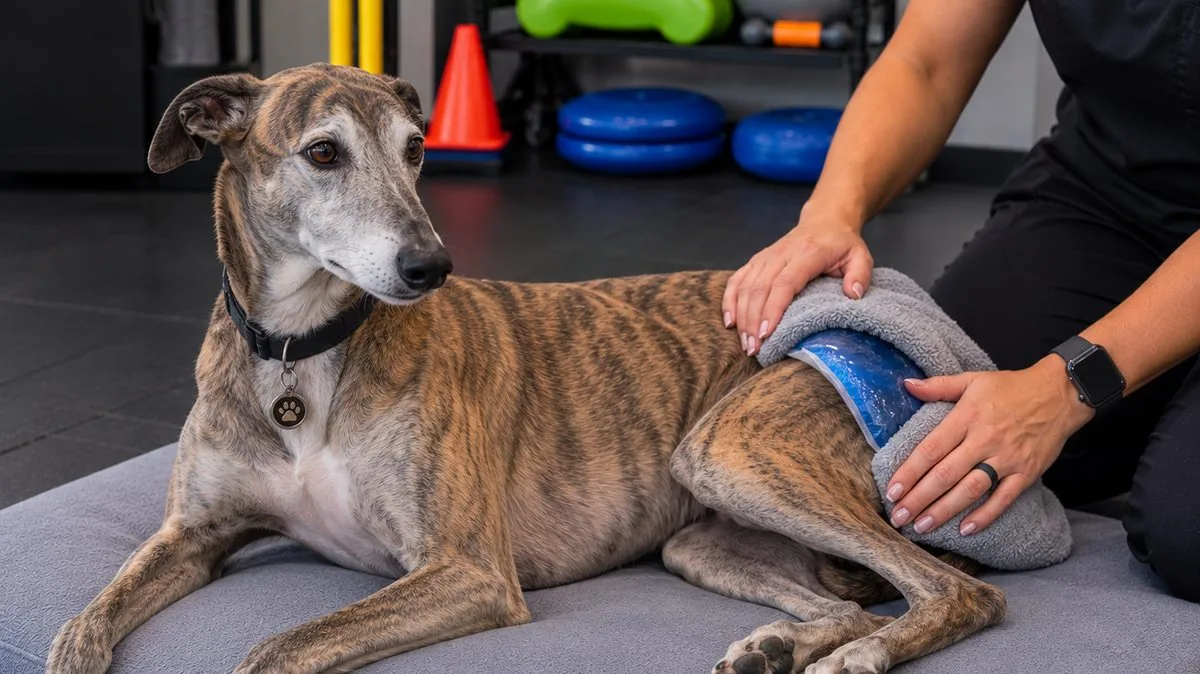
When to use ice, when to use heat, and what’s safe to do at home.
Read more
Currents that reach chronic pain sitting below the surface, where a hot pack can’t.
Read moreTell us what you’ve noticed. We’ll tell you honestly whether we think we can help.