Call 303-388-6886Call us

Chiropractic care for dogs and cats

This is quiet, hands-on work, finding the places your dog has stopped moving freely, and gently giving that movement back. Most dogs settle within a minute or two, and a good many lean into it. It is rarely used on its own; it works best as one part of a plan.

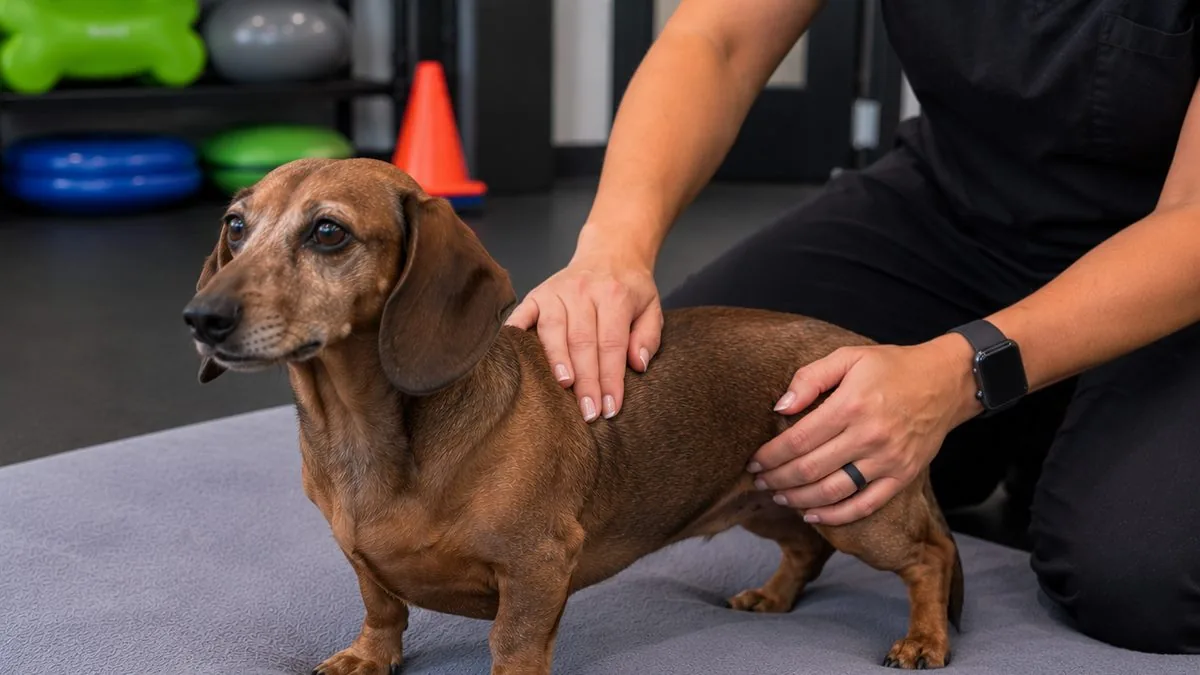
A senior dachshund standing on a padded mat while a practitioner works along his spine with both hands

What happens in a session

Your dog stands, sits or lies on a mat on the floor. The practitioner works along the spine and limbs with their hands, feeling for places where movement is restricted, and makes small specific adjustments where it is needed.

There is no table, no strapping down and no sudden force. Most of a session is assessment; the adjustments themselves take moments.

What it is for

Chiropractic care here is not about a single dramatic correction. It is about restoring movement where the body has stopped moving well, often in places nobody was looking.

  • The compensations. A dog with a sore hip changes how they carry themselves. Months later the back and neck are doing work they were never meant to do, and that becomes its own problem.
  • Restricted movement in the spine. Found by hand rather than assumed, and treated where it is actually present.
  • Working dogs and sporting dogs. Where small restrictions cost performance long before they cause obvious lameness.
  • Older dogs. Where years of small adjustments in how they move have accumulated.
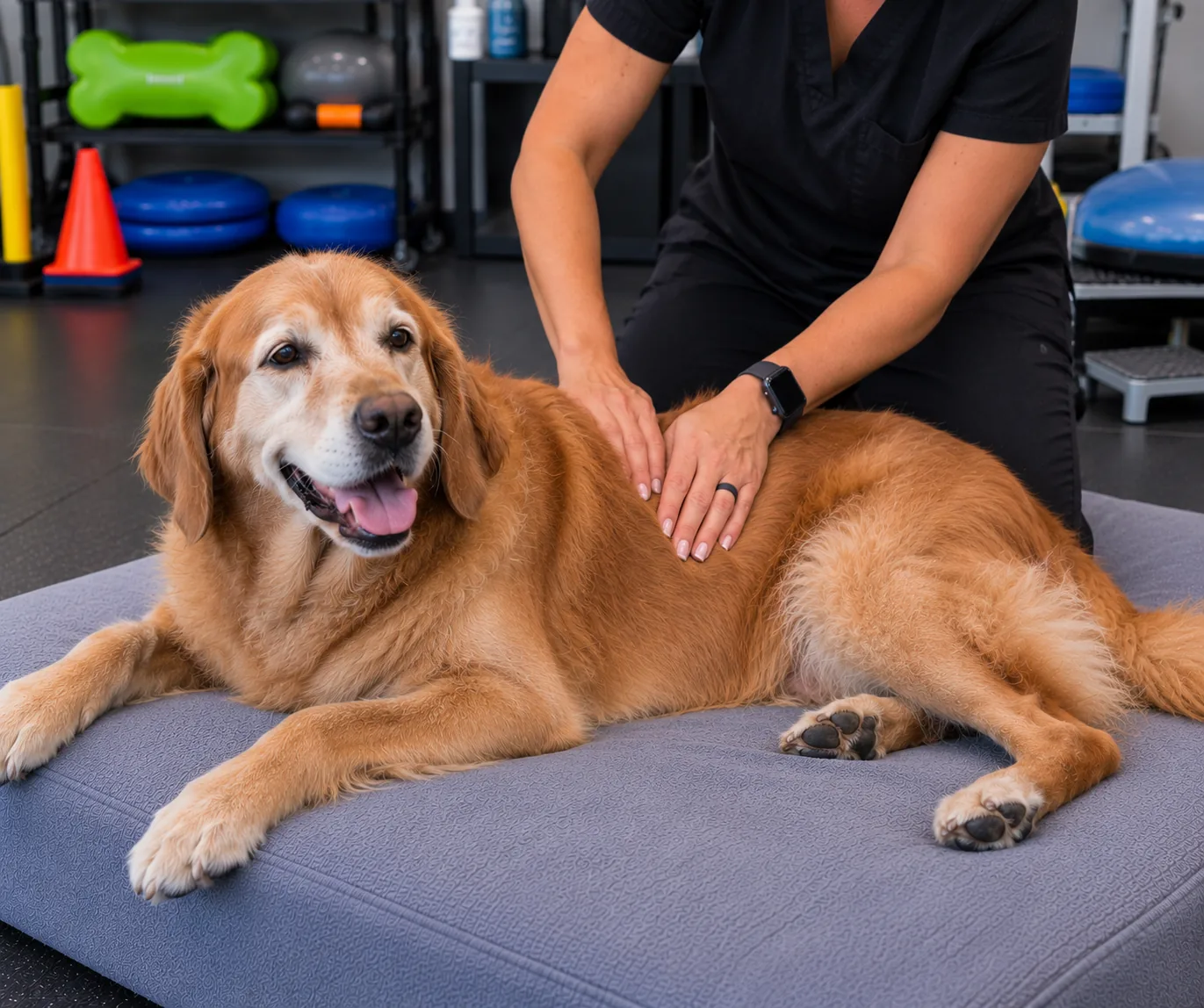
A golden retriever lying on a gray mat while a practitioner works gently along his back

Call 303-388-6886

Who is doing it

Both Dr. Michele Broadhurst and Dr. Antony Angus are certified animal chiropractors, Dr. Broadhurst through the International Veterinary Chiropractic Association, Dr. Angus through the American Veterinary Chiropractic Association, with nearly thirty years in clinical practice.

Under Texas law, animal chiropractic and musculoskeletal manipulation are classed as alternative therapy, performed where a veterinarian has established a relationship with the patient and determined it is unlikely to be harmful. That is what the referral form covers, and it is a normal step.

What it is not

It is not a substitute for a diagnosis. If your dog has a problem nobody has investigated, the first appointment is with your veterinarian.

It is also rarely used on its own. Restoring movement is one part of the job; building the strength to hold that movement is the other, which is why chiropractic usually sits inside a plan that includes exercise and often the water treadmill.

Call 303-388-6886

Questions

Questions we get asked

Is chiropractic safe for dogs?

In trained hands it is gentle work, no table, no strapping down and no sudden force. Both practitioners here are certified animal chiropractors. Texas law classes it as an alternative therapy requiring a veterinary referral, which is the form on this site.

Does a dog chiropractic adjustment hurt?

It should not. Most dogs settle within a minute or two and a good many lean into it. Most of a session is assessment by hand; the adjustments themselves take moments.

What does animal chiropractic help with?

Most often the compensations that build up when a dog has been moving around a sore joint for months, a back and neck doing work they were never meant to do. Also restricted movement in the spine, performance in working and sporting dogs, and accumulated stiffness in older dogs.

Do I need a referral from my vet?

Yes. Texas law requires a veterinary referral before rehabilitation care begins. You take the form from this site to your own veterinarian, who signs and returns it.

Read more

Read more on this

Call 303-388-6886

Often used together

Related treatments

See all treatments

Start with a phone call

Tell us what you’ve noticed. We’ll tell you honestly whether we think we can help.

Call 303-388-6886