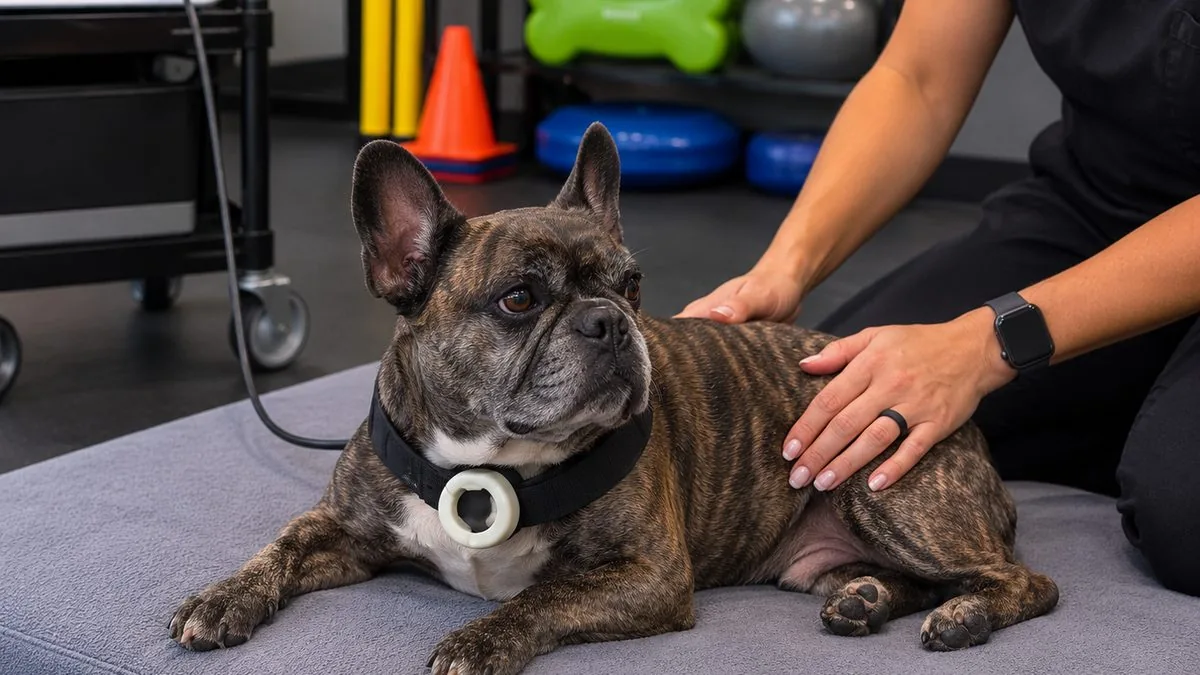
Rehabilitation for arthritic dogs in Colleyville, Texas.

Arthritis is the most common reason dogs slow down, and the most commonly dismissed. It gets filed under old age, and often the only thing offered is a daily tablet.
Medication has a real place. But it treats the pain, not the reason the joint is under so much strain, and there’s usually a good deal more available.
A dog will not limp until they have to. They’ll change how they move first, smaller steps, weight shifted off the sore side, a different way of getting up, and most of that happens too gradually to notice.
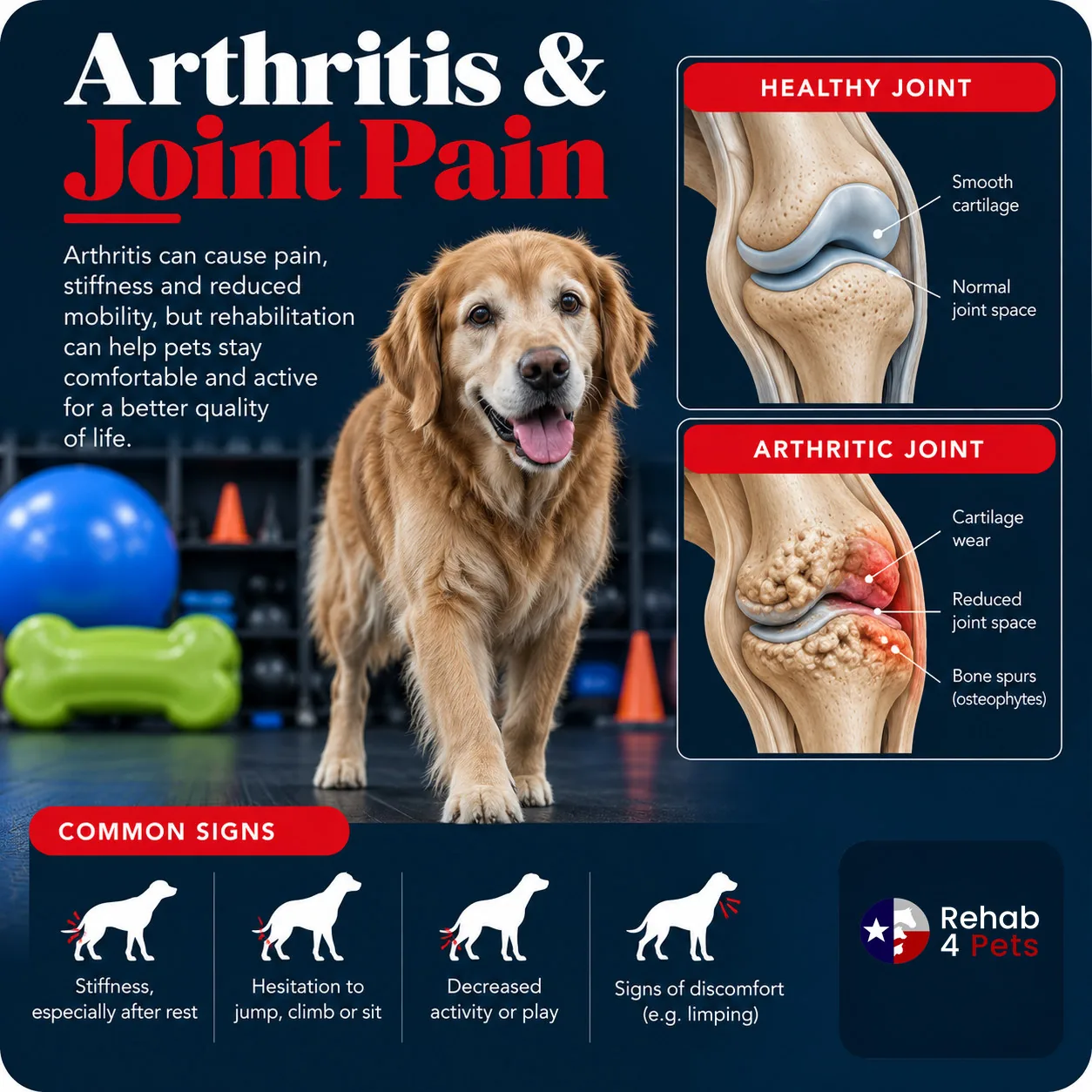
Which means by the time it’s obvious, it’s usually been going on a while. It also means the signs are behavioral as often as physical:
Cartilage caps the end of each bone and lets the joint glide. As it wears thin the space between the bones narrows and bone builds up around the edges, so movement that used to cost nothing starts to cost something. That is where the cycle below begins.
A dog whose joints hurt moves less. Moving less means losing muscle. Less muscle means the joints carry more of the load, which hurts more, so they move less still.
A great deal of what looks like aging is that loop, several turns in.
The encouraging part is that loops can be interrupted, and muscle can be rebuilt at almost any age.
It’s slower in an older dog, but it happens.

None of this replaces what your veterinarian has prescribed. It works alongside it, and for some dogs it means less medication rather than more.
A 2018 survey by the Association for Pet Obesity Prevention found that 56% of dogs and 60% of cats were overweight or obese.
Nobody enjoys this conversation and it’s rarely anyone’s fault, a dog who hurts moves less and gains weight, which makes them hurt more. It’s the same loop from a different angle.
But it’s worth saying plainly: for an arthritic dog carrying extra weight, losing some of it often does more for their comfort than anything else available. We’ll help with a realistic plan rather than a lecture.
A dog who’s unsure of their footing braces constantly, and bracing is tiring. Many Pet Parents notice a difference within days, not because anything has healed, but because their dog has stopped working so hard just to stand up.
Three short walks are usually kinder to an arthritic dog than one long one, and they add up to the same distance without the day-after stiffness.
Stiffness for the first few minutes after resting that then eases, slower on the stairs or waiting at the bottom, no longer jumping onto the couch or into the car, turning for home earlier on walks, licking repeatedly at one joint, being grumpy about being touched in one spot, shifting position more at night, and sitting with a leg out to one side. Dogs do not limp until they have to, so by the time it is obvious it has usually been going on a while.
Age alone does not usually make a dog favor one side, avoid one specific movement, or flinch at a particular touch. Those are signs of discomfort. A great deal of what looks like aging is a cycle: a dog whose joints hurt moves less, moving less costs muscle, less muscle means the joints carry more load, which hurts more. Loops like that can be interrupted.
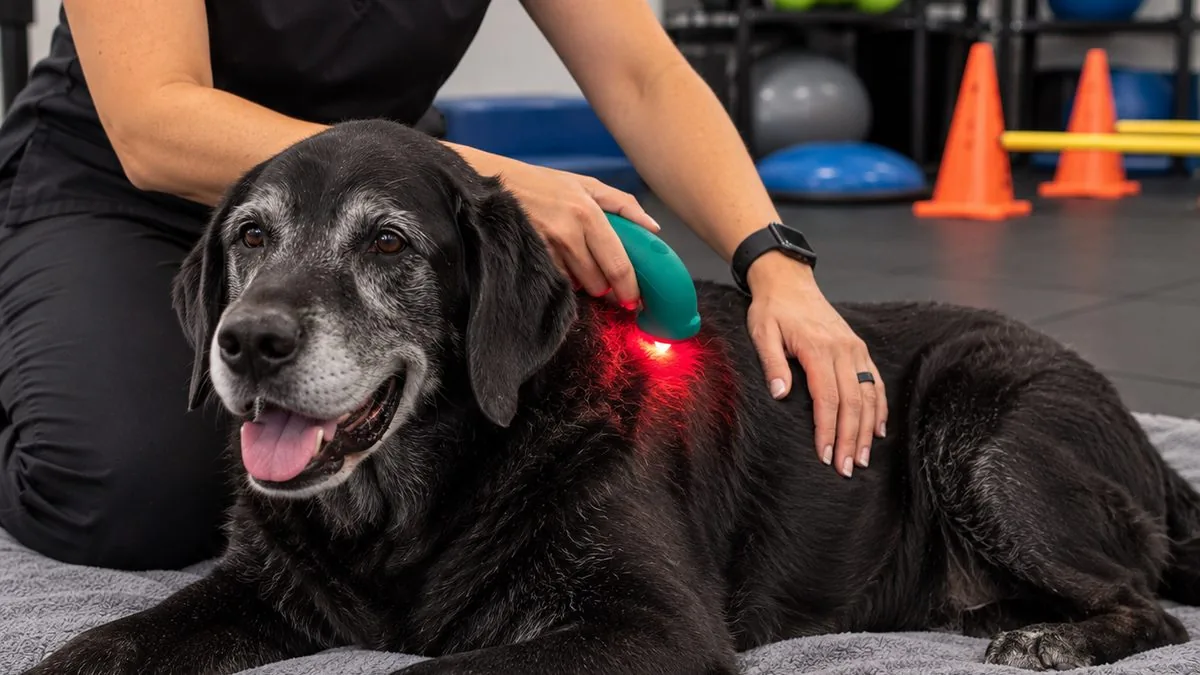
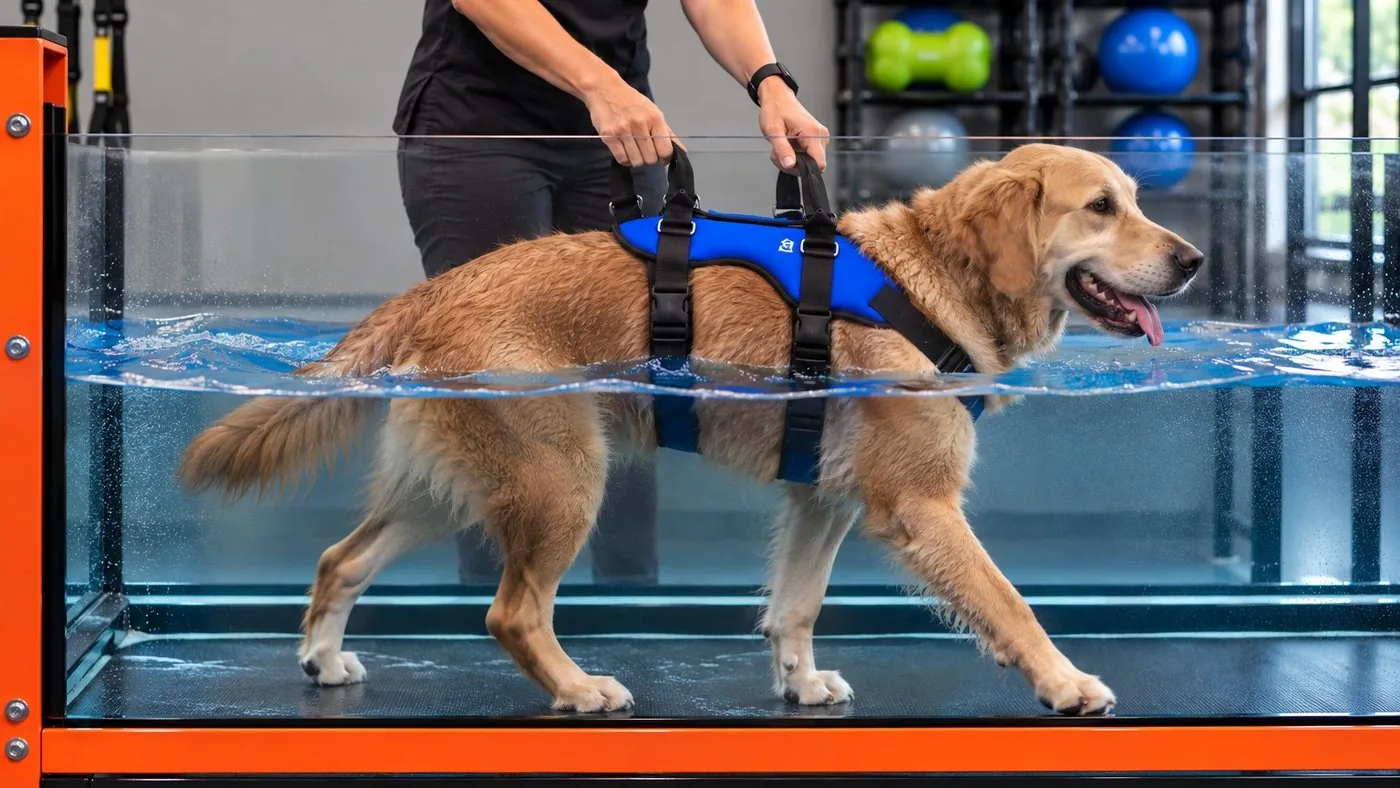
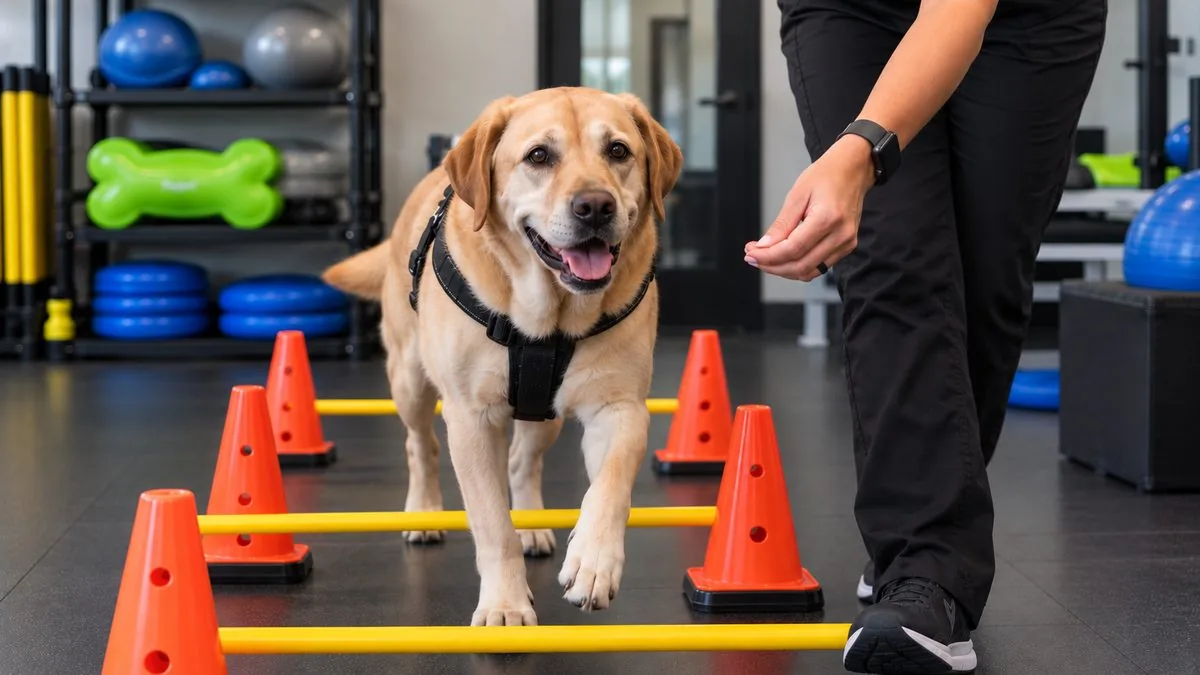
Water treadmill work, where the water takes much of the weight so a dog can build strength without the joints paying for it. Laser and shockwave therapy as drug-free approaches to joint pain. Chiropractic and manual therapy for the compensations, the sore back and neck that come from months of moving differently. Targeted exercises with a home program. And weight management, since every extra pound is paid for by the joints at every step.
Yes. Muscle can be rebuilt at almost any age. It is slower in an older dog, but it happens, and it is the main reason rehabilitation changes how an arthritic dog feels day to day.
Considerably. A 2018 survey by the Association for Pet Obesity Prevention found 56% of dogs and 60% of cats were overweight or obese. For an arthritic dog carrying extra weight, losing some of it often does more for their comfort than anything else available.

Water carries much of a pet’s weight, so they can rebuild muscle before their joints could manage it on land.
Read more
Less weight on sore joints, built around what your veterinarian recommends.
Read more
A small loop on a collar strap, often continued at home between visits.
Read moreSpeak to your veterinarian about the diagnosis and about pain relief.