Call 303-388-6886Call us

When your dog’s back legs start giving out

What it can mean, when it needs a vet today, and how rehabilitation may help.

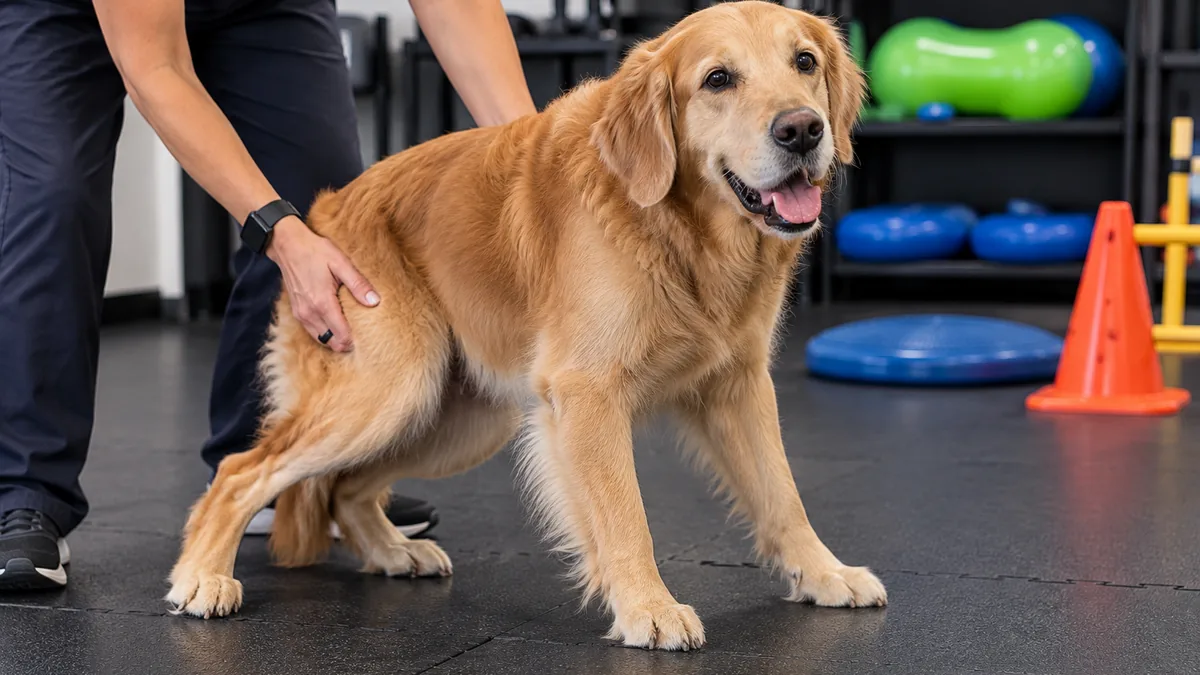
A senior golden retriever standing while a practitioner steadies his hindquarters with a hand under the thigh

It’s a frightening thing to watch. One day your dog’s back end seems unsteady, a slip on the kitchen floor, a leg that folds slightly, a moment where he can’t quite get up.

You’re right to take it seriously. Weakness in the back legs almost always has a cause worth finding, and finding it early usually gives you more options.

Call your veterinarian today if

Please call your veterinarian straight away if your dog can’t stand or walk at all, if the weakness came on suddenly over hours rather than weeks, if he seems to be in obvious pain, if he’s dragging a paw so that the top of it scuffs the ground, or if he’s lost control of his bladder or bowels.

Those signs can point to something needing prompt veterinary attention. Rehabilitation has a real role in recovery, but it comes after your vet has looked at him, not instead.

Call 303-388-6886

What “giving out” tends to look like

It rarely arrives all at once. More often Pet Parents notice a handful of these first:

  • Back legs that wobble or sway when he walks
  • A paw that scuffs, drags, or knuckles over so he walks on the top of it
  • Struggling to get up from the floor, or needing a few tries
  • Back legs sliding out on tile or hardwood
  • Sitting down heavily, or with the legs out to one side
  • Difficulty with stairs, especially going up
  • Standing with the back legs closer together or further apart than usual
  • Muscle across the back end looking thinner than it used to

A cross-section through the spinal cord, which is where the signal to the back legs travels. Weakness behind is usually a signalling problem rather than a leg problem, which is why the legs can look fine and still not work. Several different conditions cause this, and telling them apart is what the evaluation is for.

A dog with hind-leg weakness beside cross-sections of a healthy spinal cord and a changed one.

Why do a dog’s back legs give out?

Only your veterinarian can say what’s going on with your dog. But these are among the more common causes:

  • Arthritis and joint wear. Often gradual, often worse after rest, and frequently affecting the hips or knees.
  • Disc problems in the spine. More common in some breeds than others. Can affect how the nerves reach the back legs.
  • Degenerative myelopathy. A slow disease of the spinal cord seen in older dogs. Usually painless, usually starting in one back leg.
  • Knee injuries. A cruciate ligament tear can make a dog shift weight off one leg, which over time weakens both.
  • Hip dysplasia. Sometimes present from a young age and only causing trouble later.
  • Loss of muscle and conditioning. Sometimes weakness is simply weakness, and that’s the most changeable of all.

Several of these can be present at once. It’s also common for one problem to cause a second, as a dog compensates for the first.

Call 303-388-6886

How rehabilitation may help

What’s possible depends entirely on the cause, and honest answers matter more here than hopeful ones. But rehabilitation can often help in a few ways:

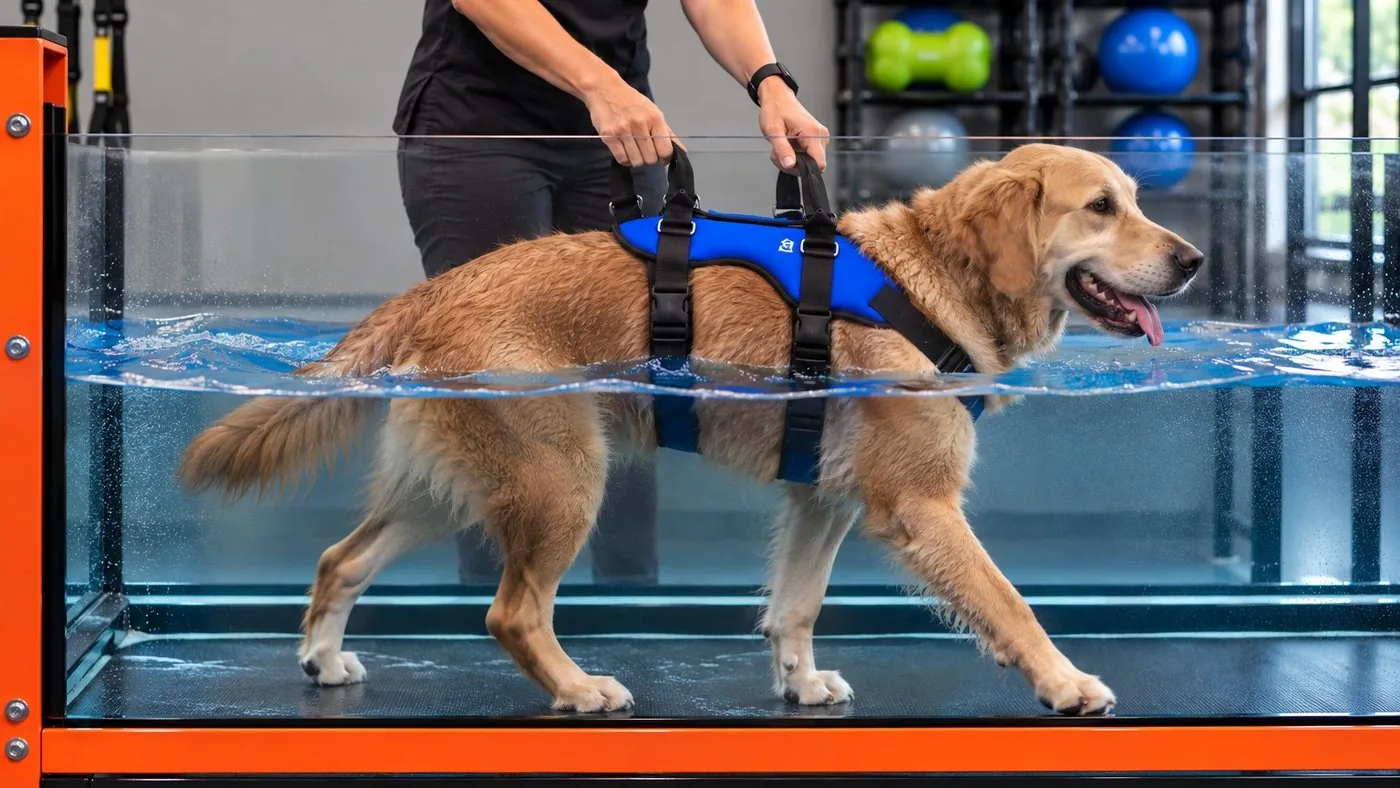
  • Building strength back. A warm-water treadmill lets a dog use his legs while the water carries much of his weight, often possible when walking on land isn’t.
  • Easing discomfort. Laser, shockwave and gentle manual therapy can help with the pain that makes a dog avoid using a leg.
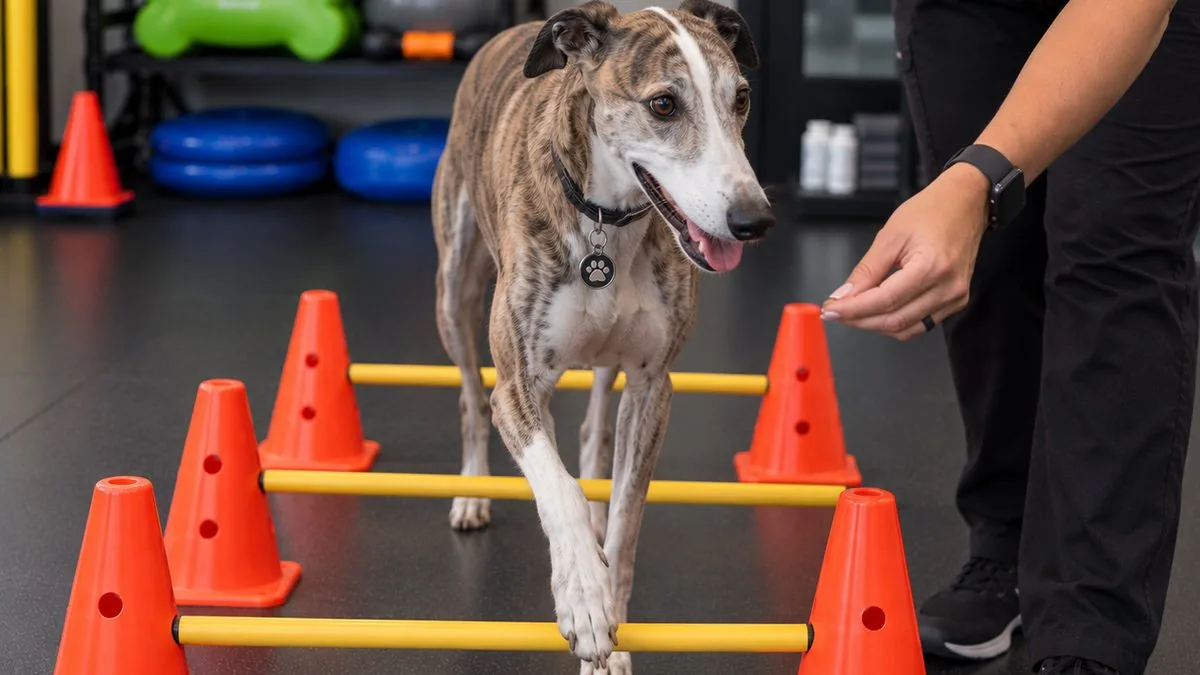
  • Improving coordination. Targeted exercises can help a dog become more aware of where his back feet are.
  • Supporting what can’t be reversed. Where a condition is progressive, the aim shifts to comfort, stability, and keeping a dog on his feet and enjoying himself for as long as possible.
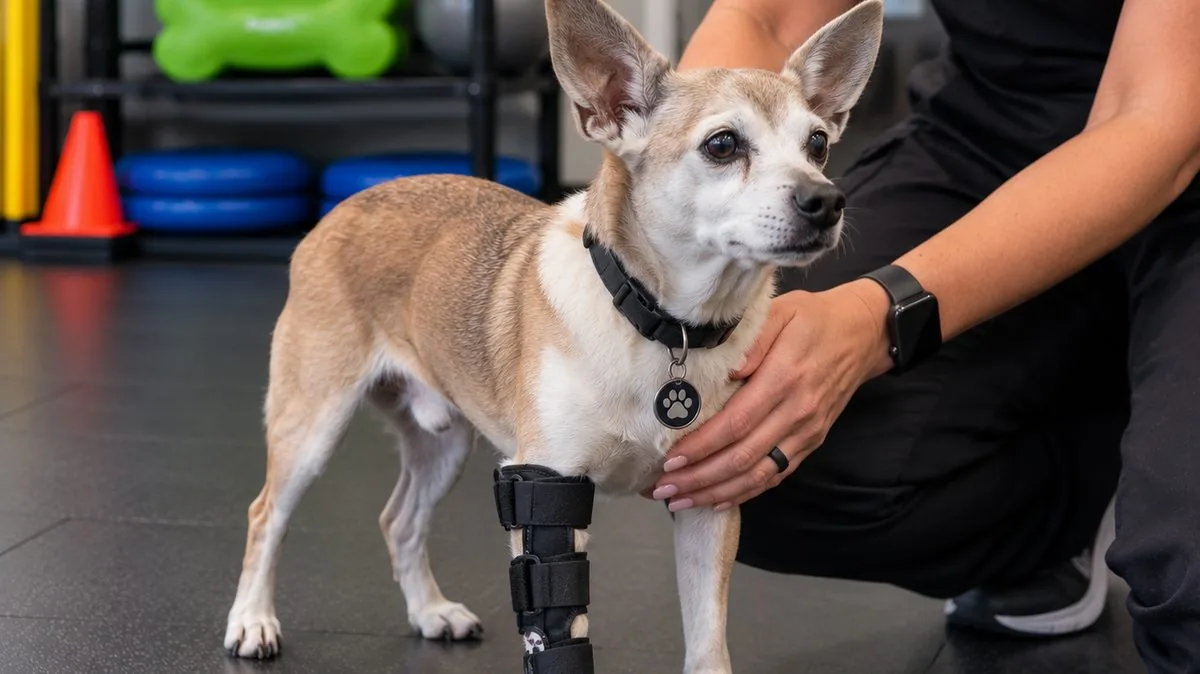
  • Braces and carts. For some dogs these are genuinely life-changing, and we can help you work out whether one would suit.

What can I do at home right now?

Cover your slick floors

Runners, yoga mats or rugs along the routes your dog walks every day. A dog whose back legs are unreliable spends real energy just staying upright on tile, and every slip knocks his confidence further.

Write down what you’re seeing

Which leg, what time of day, better or worse after rest, when it started. A short video on your phone is even better. This is genuinely useful to your vet and to us.

Call 303-388-6886

Questions

Questions we get asked

What does it mean when a dog’s back legs give out?

Weakness in a dog’s back legs can come from arthritis and joint wear, disc problems in the spine, degenerative myelopathy, a cruciate ligament injury, hip dysplasia, or simple loss of muscle and conditioning. Several can be present at once, and one problem often causes a second as the dog compensates. Only a veterinarian can say which applies to a particular dog.

When is a dog’s back leg weakness an emergency?

Call a veterinarian straight away if the dog cannot stand or walk at all, if the weakness came on over hours rather than weeks, if there is obvious pain, if a paw is being dragged so the top of it scuffs the ground, or if the dog has lost control of their bladder or bowels.

Can rehabilitation help a dog whose back legs are giving out?

It depends entirely on the cause. Rehabilitation can help rebuild strength using a warm-water treadmill where the water carries much of the dog’s weight, ease the discomfort that makes a dog avoid using a leg, improve coordination through targeted exercise, and support dogs with progressive conditions by keeping them comfortable and on their feet for longer. Braces and carts suit some dogs well.

Read more

Read more on this

Call 303-388-6886

Treatments

How we may help

See all treatments

Where to start

Speak to your veterinarian first, particularly if any of the signs near the top of this page apply.

Call 303-388-6886