
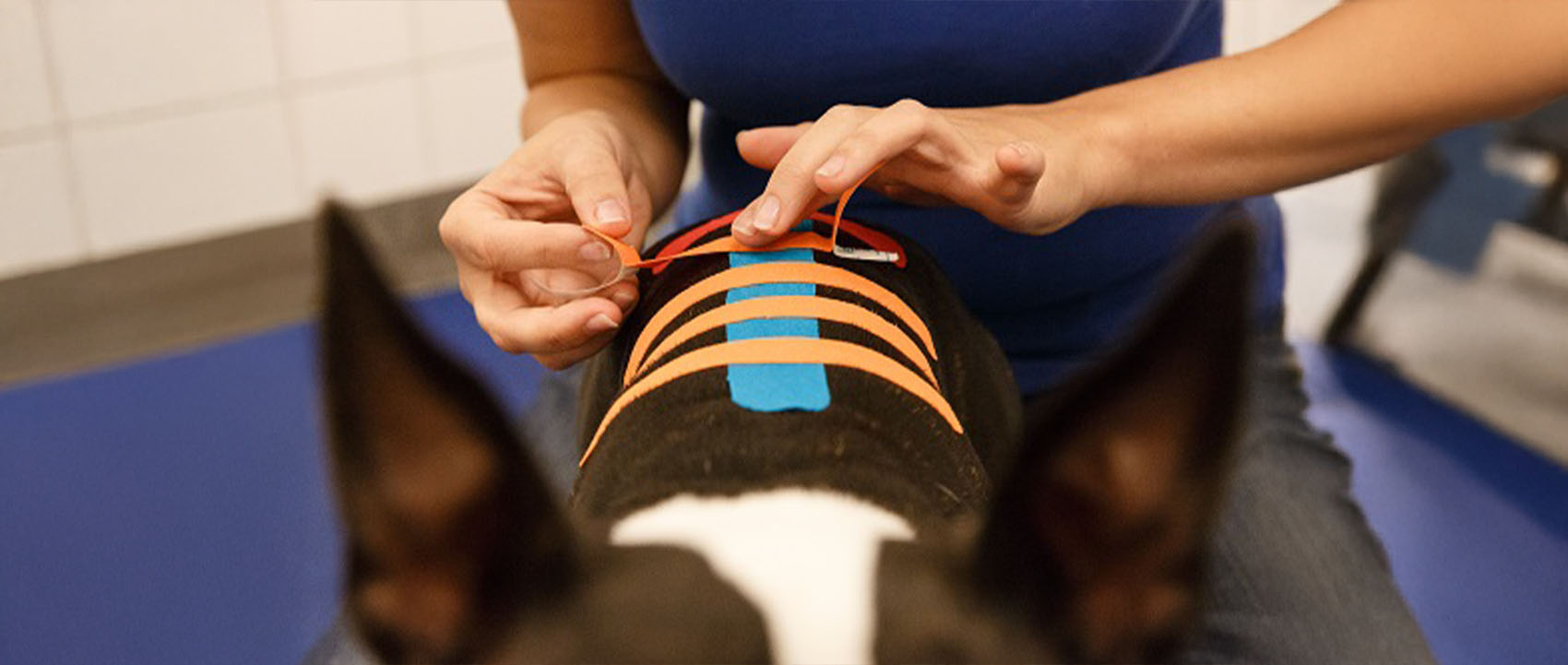
Kinesiotaping, also known as elastic therapeutic taping, has become a popular tool in human sports medicine – and it’s quickly gaining recognition in the veterinary rehabilitation world too. When applied correctly, kinesiotape can be an excellent adjunctive therapy for dogs recovering from injury, surgery, or dealing with chronic musculoskeletal issues.
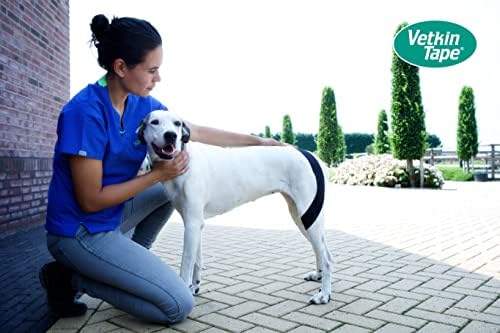
What Is Kinesiotape?
Kinesiotape is a lightweight, elastic, cotton-based tape that mimics the properties of skin and fascia. When applied with specific tension and direction, it gently lifts the skin and underlying tissues, creating a decompressive effect. This subtle lift improves circulation, lymphatic drainage, and neurosensory feedback – all of which help reduce pain and support healing.
In canine rehabilitation, kinesiotape is used alongside modalities such as laser therapy, shockwave, and manual therapy to enhance results and extend therapeutic effects between sessions.
Key Benefits of Kinesiotaping in Dogs
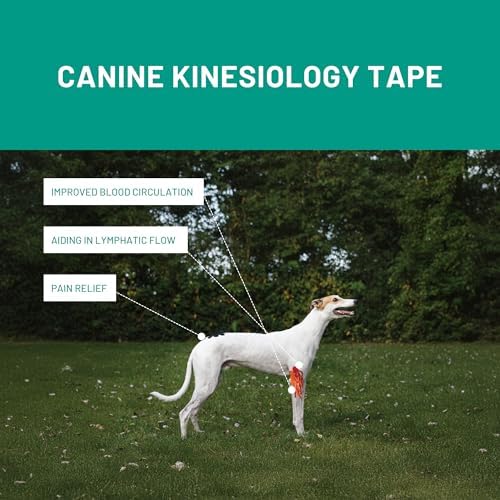
- Improves Circulation and Lymphatic Flow
By lifting the skin slightly, kinesiotape allows better blood and lymphatic movement beneath the surface. This helps reduce swelling and inflammation after surgery, injury, or strenuous activity – especially in dogs prone to edema or post-operative seromas.
- Reduces Pain and Muscle Tension
The tape stimulates cutaneous mechanoreceptors, which can help modulate pain signals to the brain (the “gate control” theory). This sensory input also helps relax hypertonic muscles and improve comfort for dogs with myofascial trigger points or compensatory tension patterns.
- Supports Neuromuscular Function
Kinesiotape can provide gentle proprioceptive feedback to improve body awareness and stability – especially in dogs with neurological deficits or poor limb placement. For example, taping can assist dogs recovering from IVDD, FCE, or post-surgical weakness by encouraging proper gait patterns.
- Provides Postural and Joint Support
Unlike rigid taping, kinesiotape does not restrict movement. Instead, it supports the natural motion of muscles and joints, making it ideal for dogs with mild instability, hip or shoulder weakness, or compensatory posture due to pain. It’s often used to facilitate proper alignment in the pelvis, spine, and limbs.
- Enhances Muscle Activation or Relaxation
Depending on how the tape is applied, it can either facilitate (activate) a weak muscle or inhibit (relax) an overactive one. This makes it an invaluable tool in canine rehab programs targeting muscle imbalances – such as iliopsoas overuse, biceps strain, or gluteal weakness.
Common Applications in Canine Rehabilitation
Post-surgical recovery: To minimize swelling and promote tissue healing after procedures like TPLO, cruciate repairs, or hemilaminectomy.
- Orthopedic pain: Support for osteoarthritis, hip dysplasia, or luxating patella.
- Neurological cases: Improving proprioception and limb awareness in dogs with spinal or nerve injuries.
- Myofascial dysfunction: Reducing pain and tightness in trigger points and improving fascial glide.
- Performance and conditioning: Assisting sporting or working dogs to maintain mobility and prevent overuse injuries.

When and How to Apply
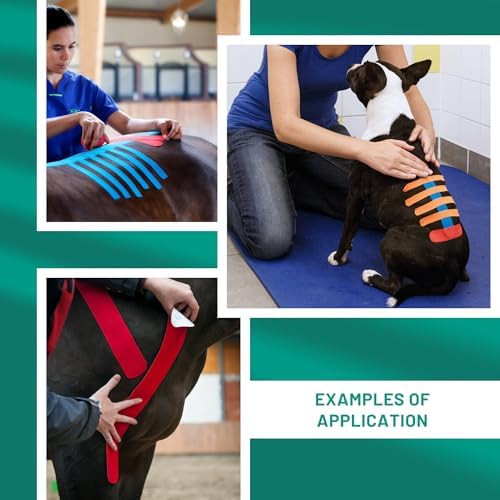
Application technique is key. The tape’s direction, stretch percentage, and anchor points determine whether it’s used for lymphatic drainage, muscle facilitation, or inhibition. For example:
- Lymphatic taping: Light tension with fan cuts to encourage drainage.
- Muscle inhibition: Tape applied from insertion to origin with moderate stretch.
- Muscle facilitation: Tape applied from origin to insertion with light to moderate stretch.
It’s important that taping be done by a trained canine rehabilitation practitioner or veterinarian, as improper application can reduce effectiveness or cause skin irritation.
Precautions
While kinesiotaping is generally safe, practitioners should always:
- Test for skin sensitivity before application.
- Avoid open wounds or areas with infection.
- Monitor dogs to ensure they do not chew or lick the tape.
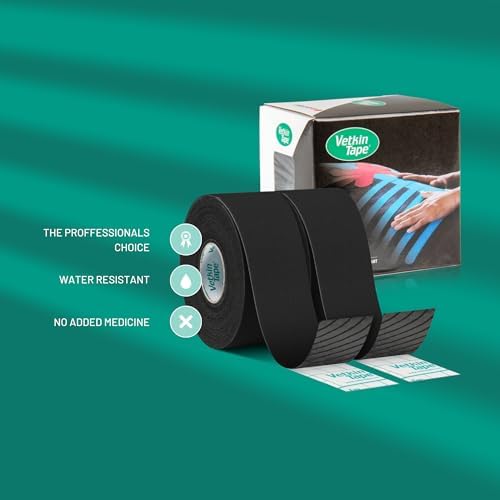
- Use high-quality, veterinary-grade tape suitable for fur and sensitive skin.
Integrating Kinesiotaping into a Holistic Treatment Plan
At Rehab 4 Pets, kinesiotape is often combined with other therapies such as laser, TECAR (Winback) therapy, manual therapy, and exercise-based rehab. The tape continues to provide proprioceptive and circulatory benefits long after the session – extending the impact of in-clinic treatments and supporting recovery at home.
In Summary
Kinesiotaping is a gentle yet powerful addition to canine rehabilitation, offering pain relief, enhanced movement, and better recovery without restricting motion. When used correctly, it becomes an effective bridge between therapy sessions – keeping dogs comfortable, functional, and on track to return to their active, happy lives.