
Extracorporeal Shockwave Therapy (ESWT) is a non-surgical treatment that delivers focused acoustic pressure waves into injured tissues. These high-energy sound waves interact with cells to reduce pain, decrease inflammation, and stimulate tissue repair. In veterinary medicine, ESWT is commonly used for chronic orthopaedic and soft-tissue conditions, often when other treatments have plateaued. It’s analogous to a “deep massage” or targeted thunderclap of energy that stimulates healing at the cellular level.
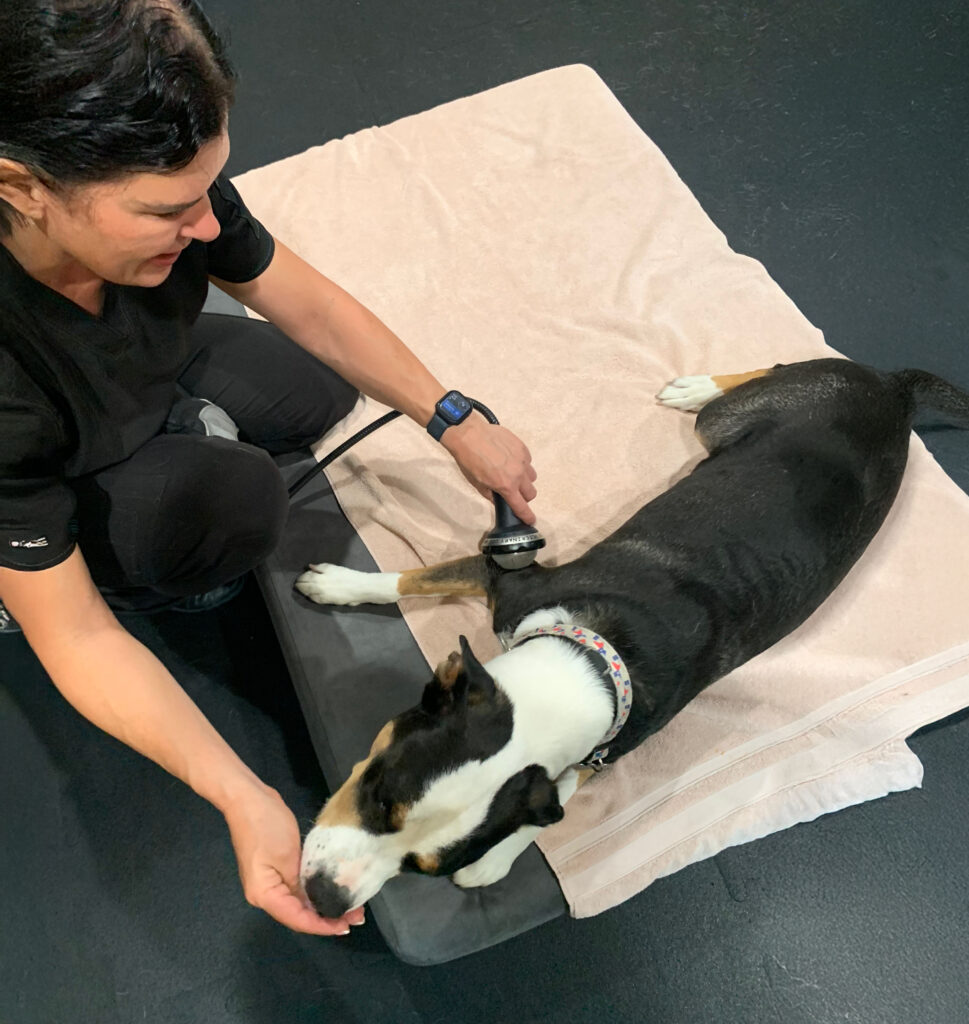
- Uses: ESWT is beneficial for many conditions in dogs and cats. Common applications include:
- Osteoarthritis: Hip, knee, shoulder arthritis pain.
- Tendinopathies: Chronic tendon or ligament injuries (e.g. supraspinatus tendinitis, CCL sprains).
- Delayed Fracture Healing: Non-union or slow-healing fractures.
- Pain Management: Acute soft-tissue strains, back pain, or other localized chronic pain sites.
- Mechanism and Benefits: During an ESWT session, a handheld applicator transmits sound waves into the target area. These waves increase local blood flow and release growth factors in the tissue. The net effect is often a reduction in pain and faster repair of bone and tendon fibers. In clinical practice, pet owners may notice gradual improvement over weeks. The treatment is outpatient: each session lasts only a few minutes, and newer machines often require no anesthesia. Unlike drug therapies, ESWT promotes tissue regeneration rather than just symptom relief.
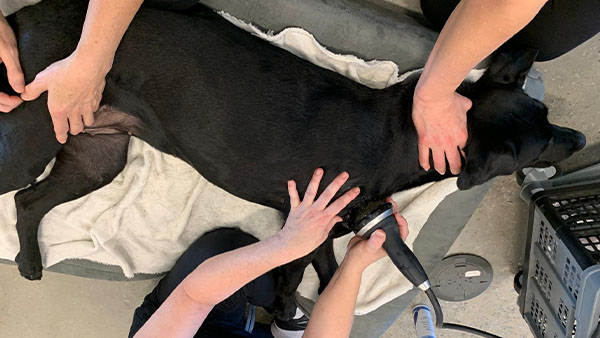
Rehabilitation protocols typically involve 3-5 shockwave treatments spaced a few weeks apart. Most pets tolerate it well; some may be briefly sedated (though many relax on their own). Side effects are rare but can include mild bruising or transient soreness for a day or two.
Refer your patient: Veterinarians or techs in Dallas-Fort Worth seeing patients with orthopedic pain or non-healing injuries should consider ESWT. If conservative management (rest, meds, injection) has not fully resolved lameness, refer the pet to Rehab 4 Pets for a shockwave evaluation. Our vet referral form is provided for easy submission of cases for ESWT
Author:
Dr. Michele Broadhurst, DC, CCSP, FIAMA, CCRP, CAC, IVCA
DVM – Rehab 4 Pets (Clinical Director)