
Extracorporeal Magnetotransduction Therapy (EMTT) is an advanced regenerative modality using high-frequency electromagnetic pulses to stimulate healing in deep tissues. Unlike shockwaves, EMTT’s magnetic fields penetrate at frequencies of 100–300 kHz, promoting cellular repair over a broad treatment area. In practical terms, EMTT delivers rapid bursts of electromagnetic energy that enhance blood flow, cell permeability, and metabolic activity in injured joints, bones, and muscles.
The treatment is noninvasive and typically lasts only 6-8 minutes. Because it does not heat tissues externally, pets experience no pain or anesthesia during EMTT sessions.
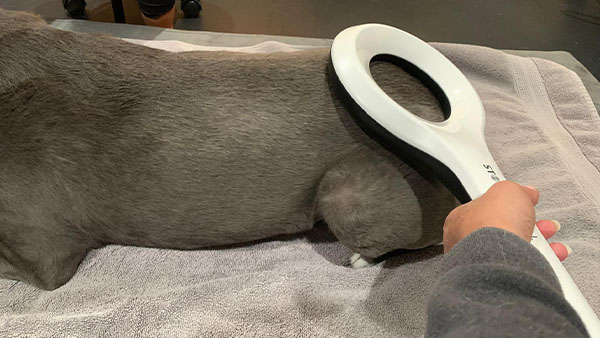
- What it treats: Degenerative joint disorders (osteoarthritis in knees, hips, shoulders), intervertebral disk issues (IVDD), tendon and ligament injuries (tendinopathies), chronic soft-tissue pain (back, shoulder, etc.), and post-surgical rehabilitation. EMTT has also been used in horses and humans for bone healing and inflammation.
- How it works: The electromagnetic pulses cause increased circulation and stimulate osteoblast (bone) and fibroblast (tendon) activity. Preclinical studies show EMTT can upregulate genes involved in mineralization, leading to faster bone healing and stronger connective tissue. Unlike static magnets, EMTT’s rapid pulses reach deep tissues uniformly.
In practice, a pet might undergo 4-12 EMTT treatments, spaced days apart, depending on chronicity. We have found this therapy particularly helpful for senior pets with arthritic joints who have not fully responded to medications. Reported results include significant pain reduction and increased mobility. Because there is no downtime, animals can eat, drink, and walk immediately after therapy.
Refer your patient: EMTT is a novel but promising tool in the rehab toolbox. Veterinarians in Dallas-Fort Worth who have patients with refractory arthritis or musculoskeletal injuries can refer to Rehab 4 Pets for EMTT sessions. This therapy is best used as part of a multimodal plan (often alongside exercises and other modalities). To arrange EMTT for a pet patient, please use our vet referral form.
Author:
Dr. Michele Broadhurst, DC, CCSP, FIAMA, CCRP, CAC, IVCA
DVM – Rehab 4 Pets (Clinical Director)